Mexican & Tacos
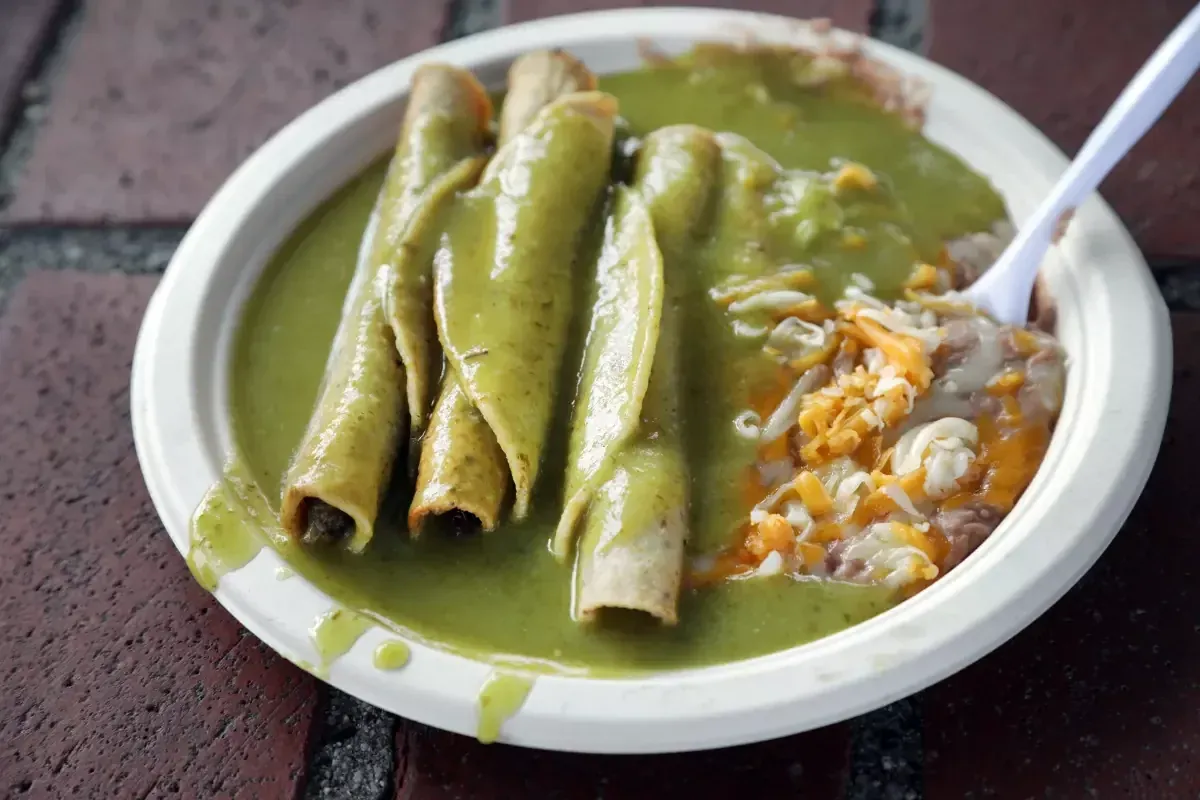
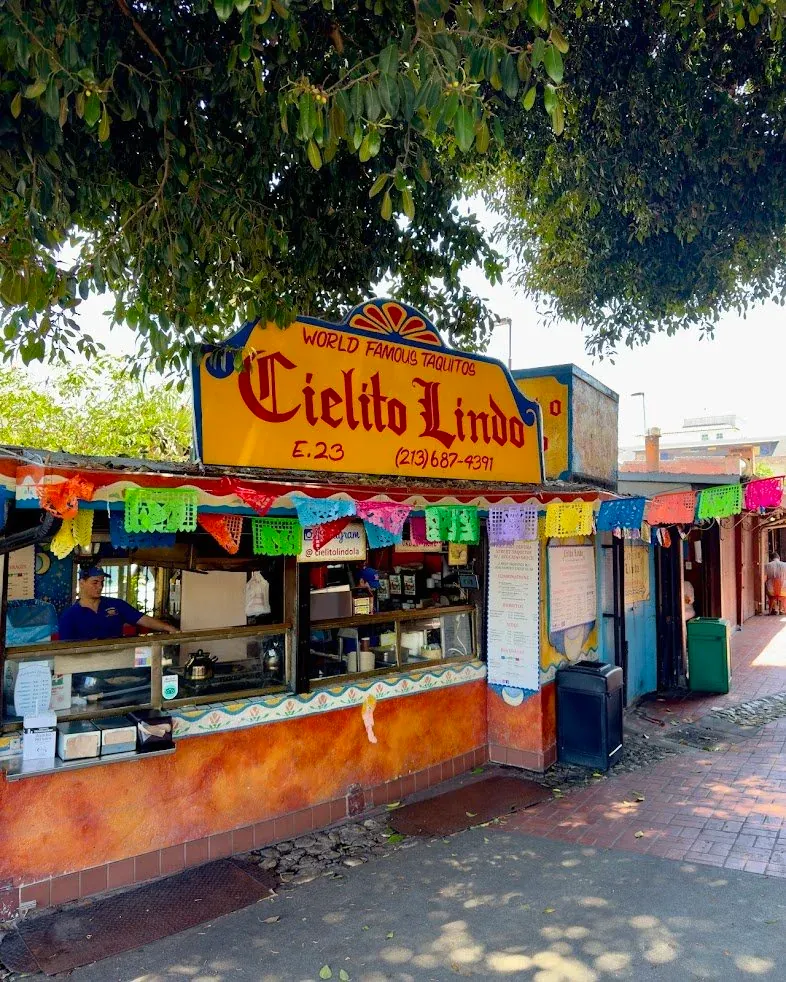
Founded in 1934 on historic Olvera Street by Aurora Peñasco, Cielito Lindo is
world-famous as a pioneer of the American taquito, renowned for its crispy,
hand-rolled beef taquitos smothered in a signature warm green avocado-chili
sauce made from a closely guarded family secret recipe. Operating continuously
at the same spot for over 90 years, the Depression-era stand that once sold
them for a nickel has stayed in the same family through four generations.
Mariscos Jalisco (Boyle Heights & various)
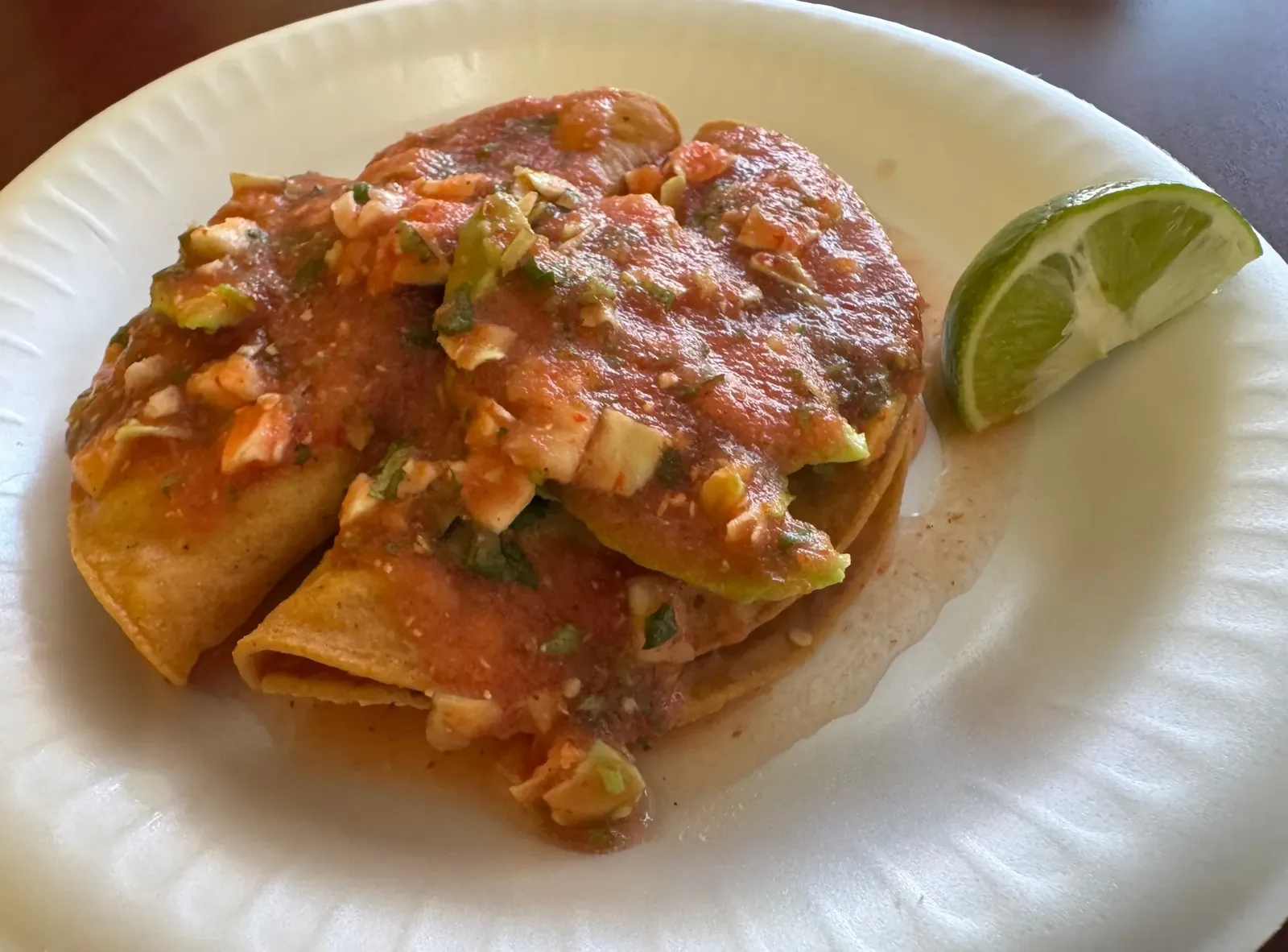
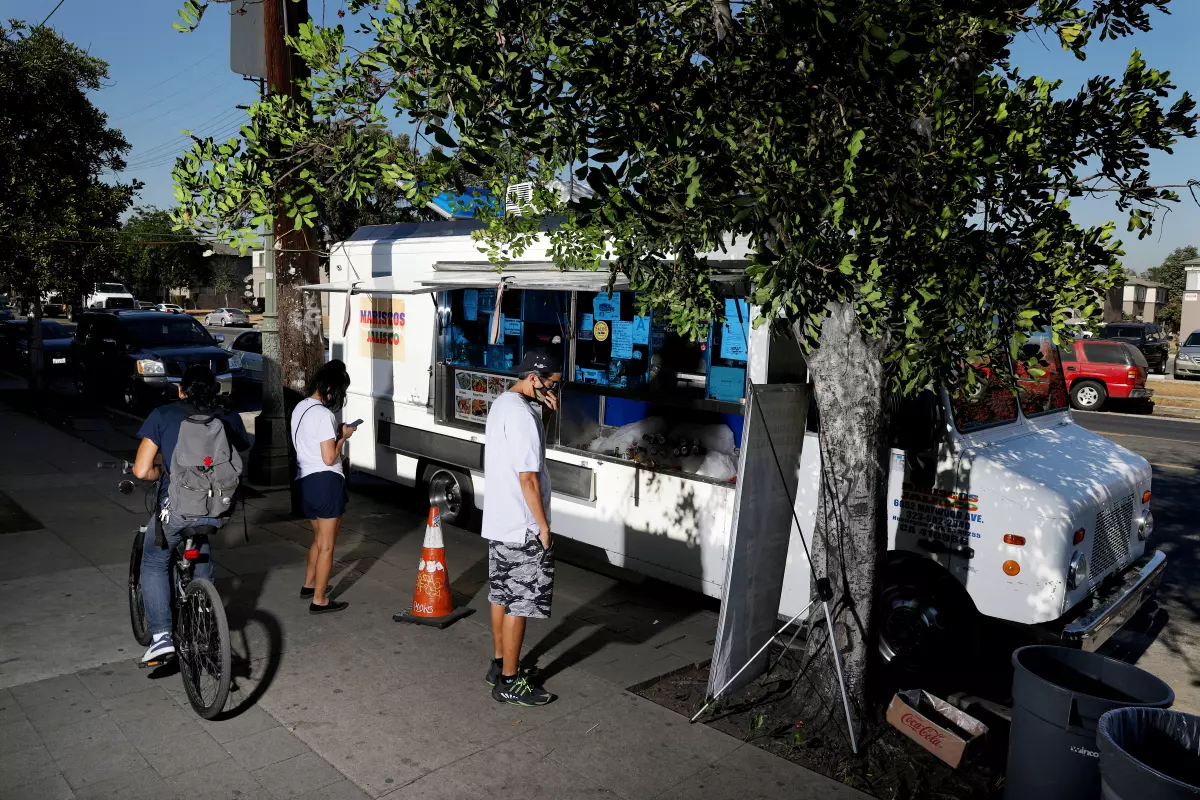
Located on Olympic Boulevard in Boyle Heights, Raul Ortega's legendary lonchera
has spent over two decades serving what many consider Los Angeles' most iconic
taco. The signature tacos de camarón feature a secret-recipe mixture of spiced
shrimp folded into a fresh corn tortilla, deep-fried until golden, and crowned
with avocado and tangy salsa. The result is a masterclass in texture—crunchy
and savory on the outside, cool and refreshing on top. Ortega has since added a
small indoor dining space steps from the original truck, a second truck on La
Cienega Boulevard, a Downtown outpost, and a sit-down restaurant in Pomona.
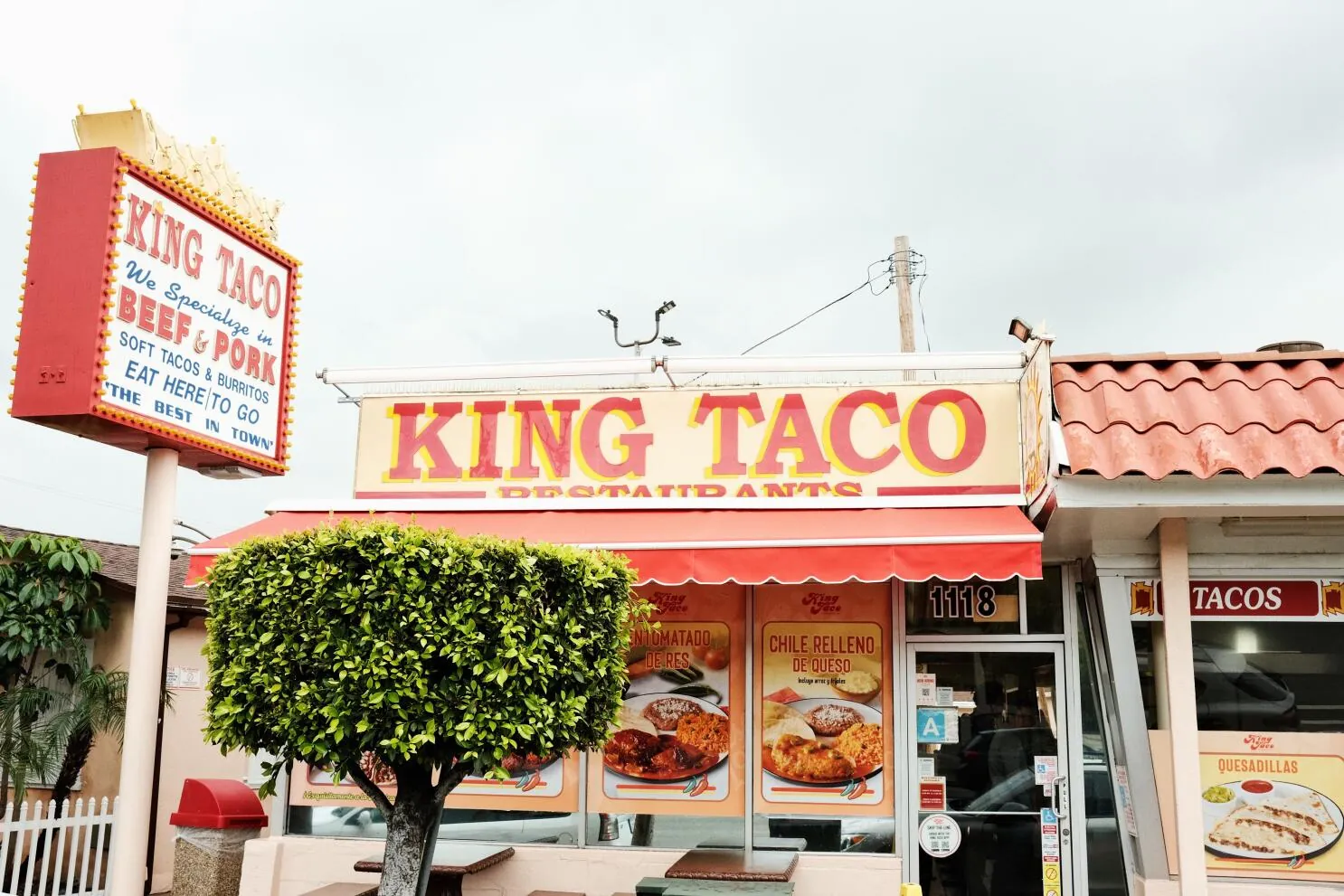
Founded in 1974 by Raúl and Lupe Martinez from a converted ice cream truck,
King Taco revolutionized Los Angeles dining by introducing authentic Mexico
City-style soft tortilla tacos to a region dominated by hard-shell chains.
Their signature carne asada and al pastor tacos are piled high on fresh,
double-layered corn tortillas, garnished with chopped cilantro and onions, and
drenched in their notoriously fiery red or green salsas. Growing from a single
mobile kitchen into a Southern California empire, King Taco laid the blueprint
for modern taco truck culture.
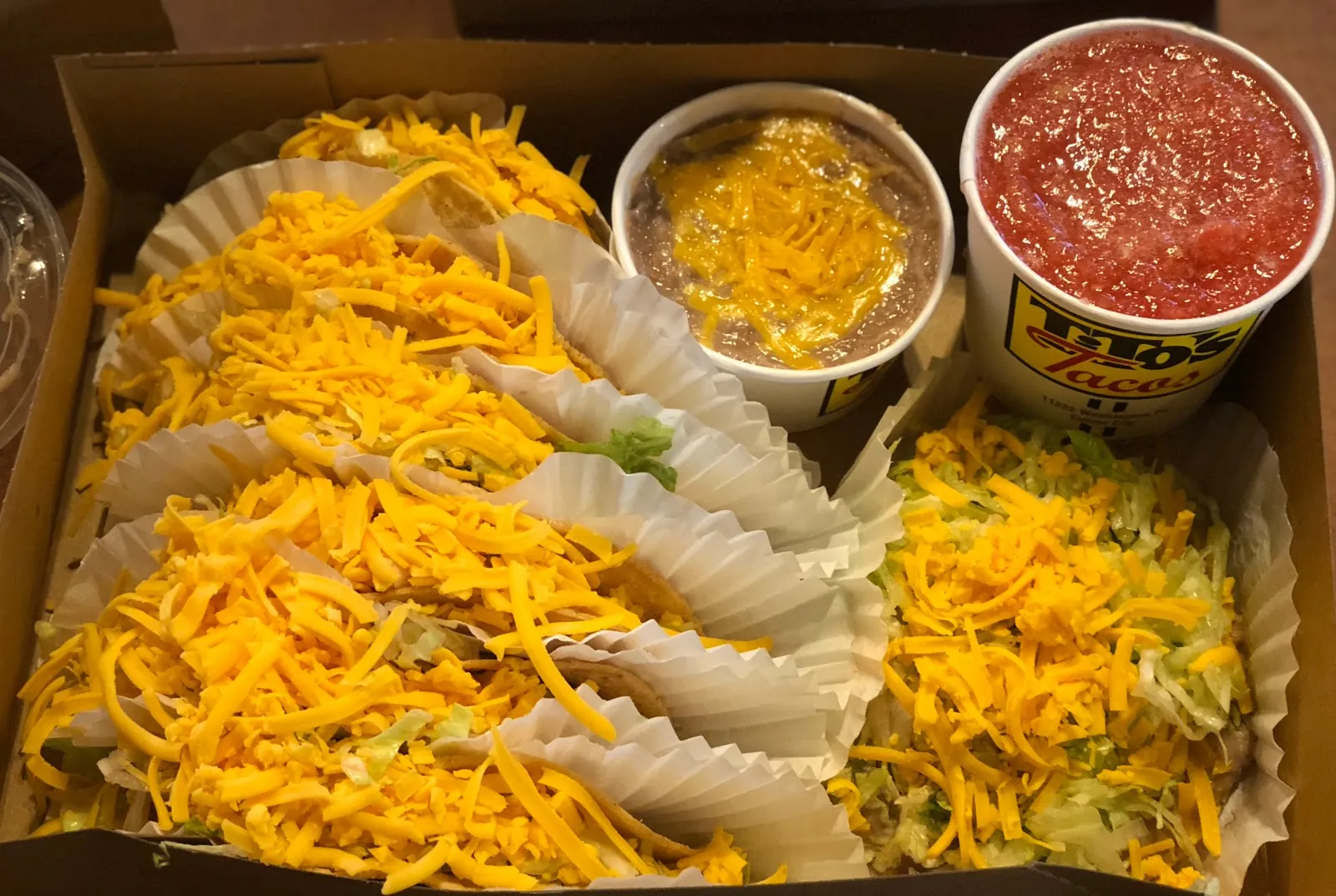
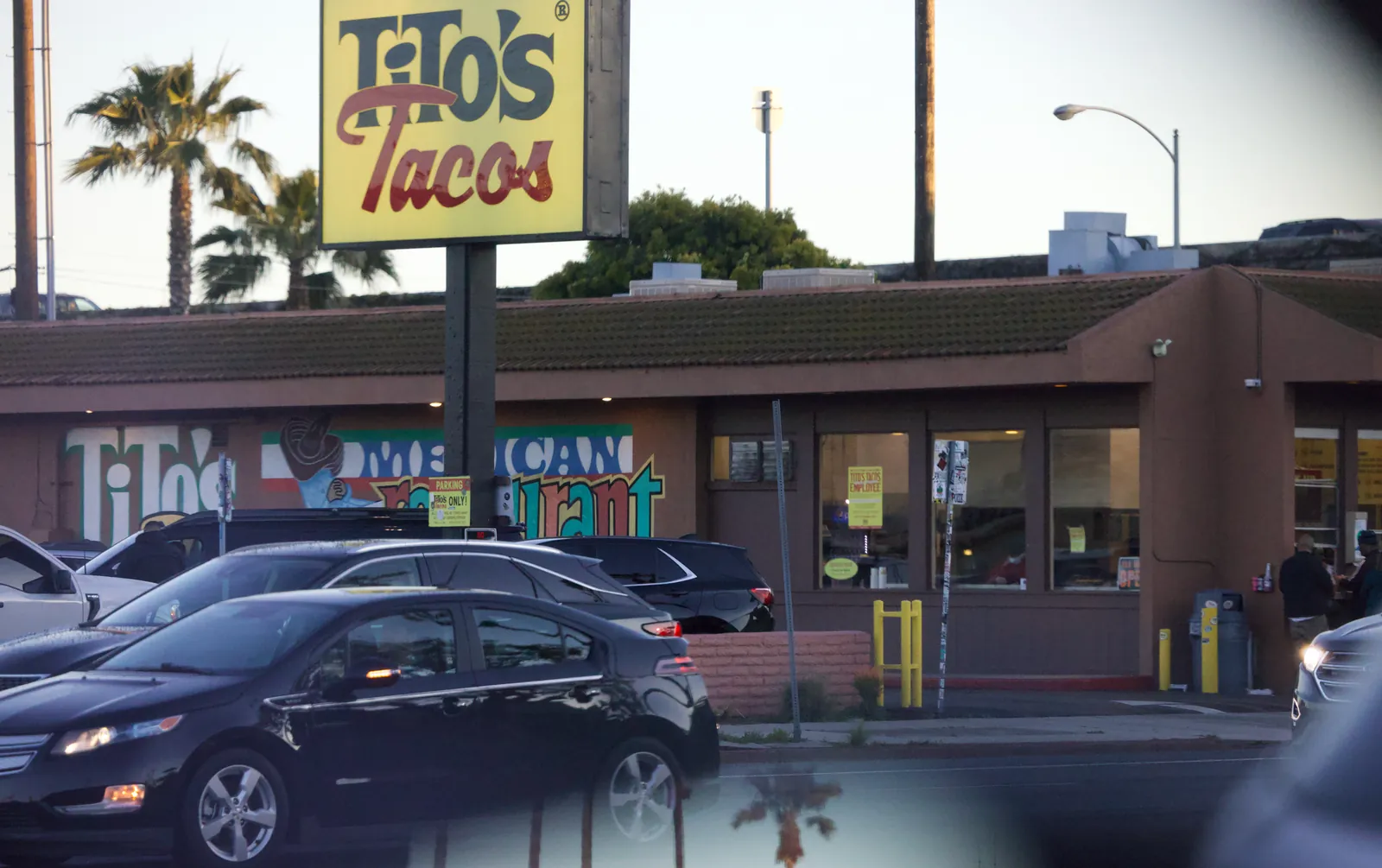
Founded in 1959 by Benjamin Davidson in Culver City, Tito's Tacos is an
enduring Los Angeles landmark famous for its nostalgic, Americanized fast-food
style tacos. Their iconic hard-shell beef tacos feature seasoned ground beef
nestled inside a freshly fried, crunchy tortilla, topped with a generous mound
of shredded iceberg lettuce and a blanket of bright orange cheddar cheese.
Paired with their thin, mild salsa and tortilla chips, Tito's long lines and
retro, walk-up window aesthetic have remained virtually unchanged for over six
decades.
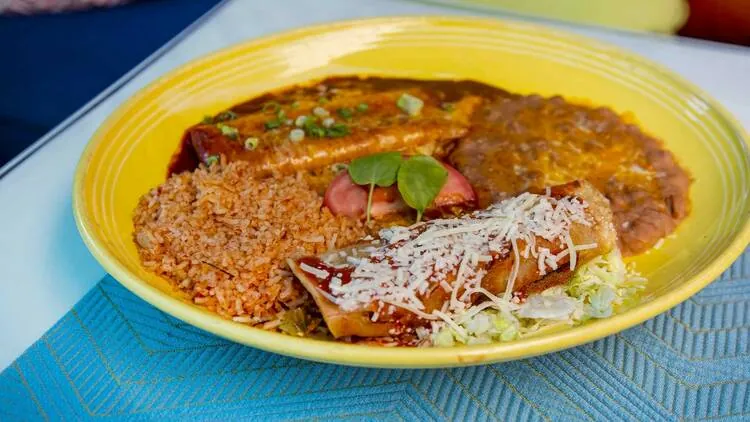
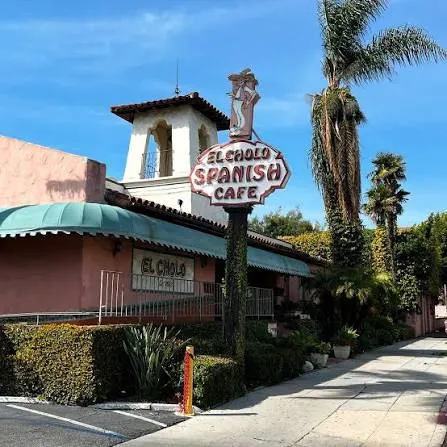
Founded in 1923 by Alejandro and Rosa Borquez, El Cholo is widely recognized
as the birth site of Los Angeles-style Sonoran Mexican dining. Celebrated for
introducing the cheese enchilada to the region—and later popularizing nachos
in 1959—El Cholo's menu serves a decade-by-decade timeline of vintage
classics, from green corn tamales to hand-shaken top-shelf margaritas. Housed
in its sprawling, Spanish tile-roofed hacienda in Mid-City, El Cholo has
hosted generations of Angelenos for over a century.
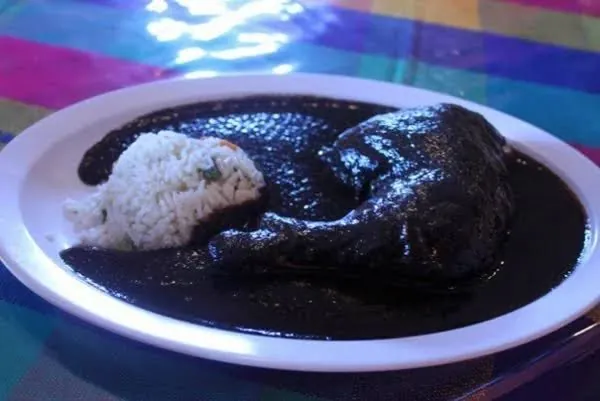
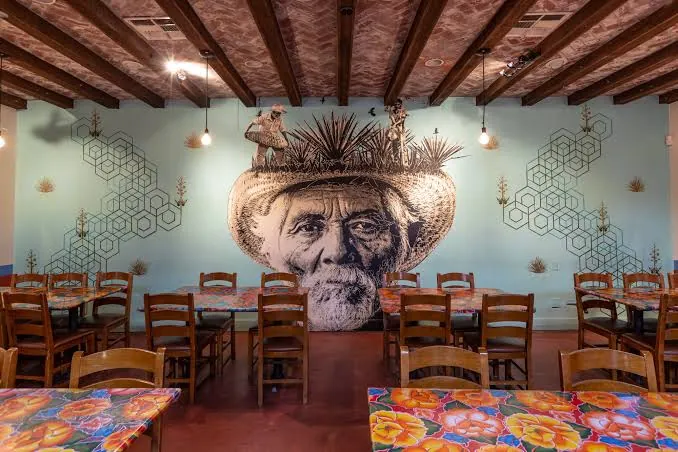
Fernando Lopez and Maria Monterrubio opened Guelaguetza on Olympic Boulevard
in 1994, and it became the center of Oaxacan life in Los Angeles—the setting
for countless quinceañeras, weddings, and anniversaries, with live music on a
bandstand most nights. The kitchen turns out tlayudas the size of pizzas,
tamales steamed in banana leaves, bowls of goat stew, chapulines, and above
all mole, in the deep reds and blacks of the family's home state. In 2015 it
won a James Beard America's Classics award. The founders' children—Bricia,
Fernando Jr., and Paulina—run it now, and have added a mezcal bar.
Delis, Bakeries & Classic Sandwiches
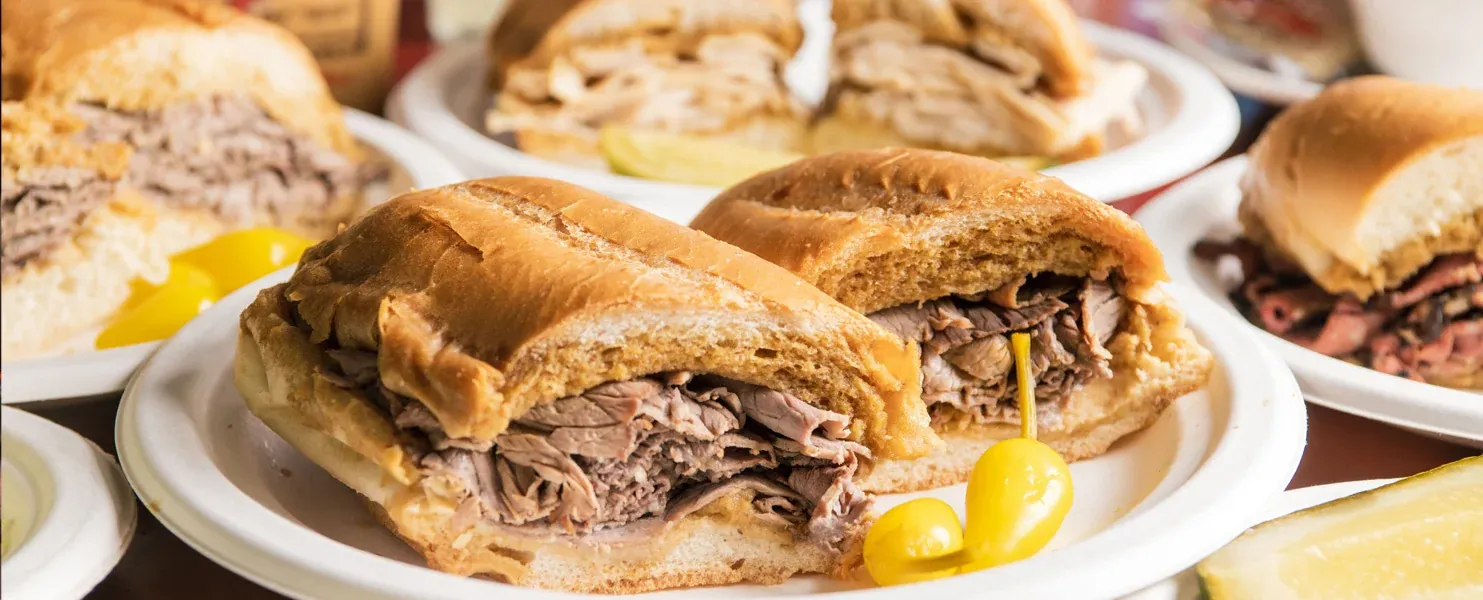
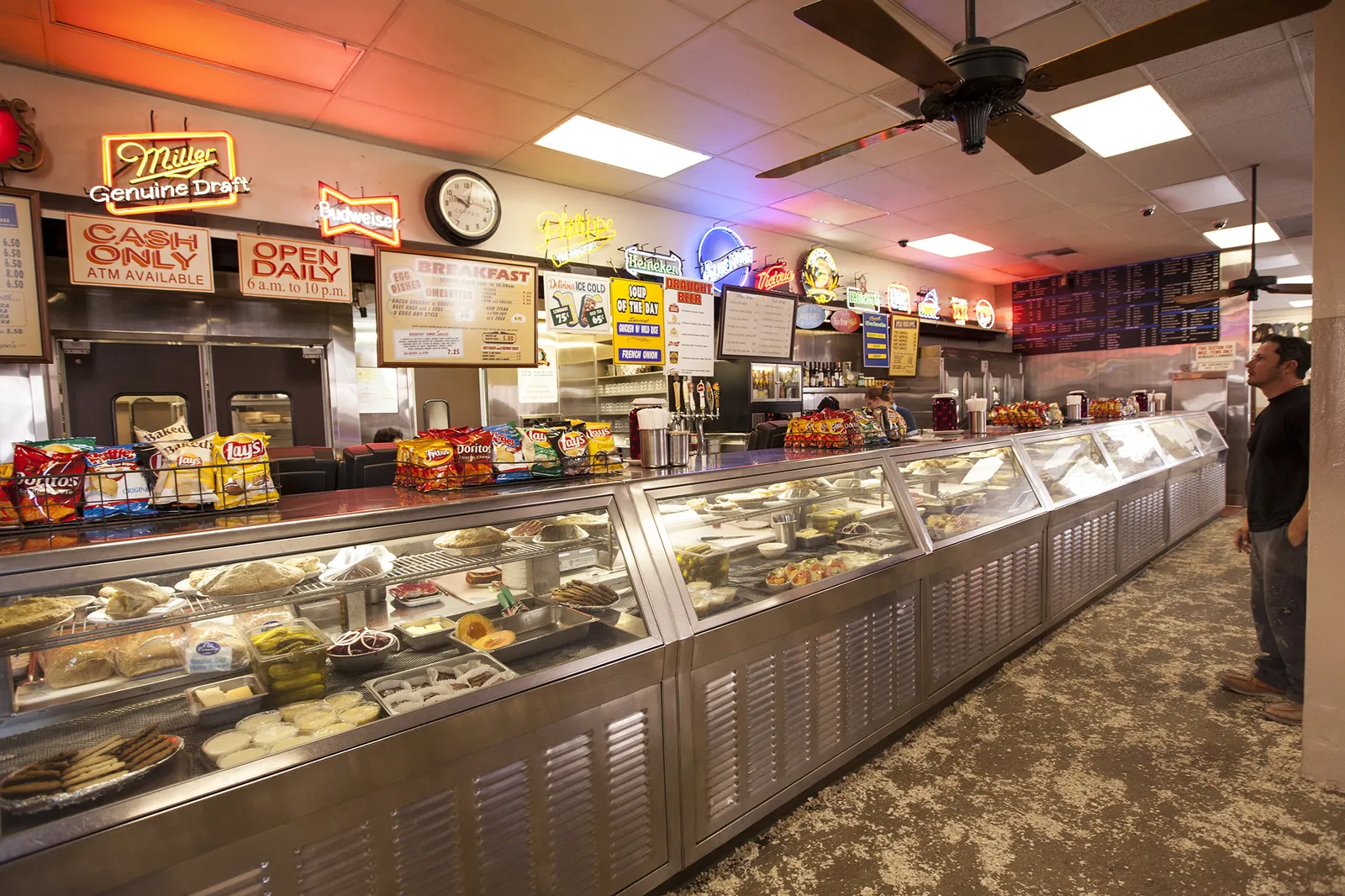
Founded in 1908 by Philippe Mathieu, Philippe The Original is a Chinatown
institution renowned as the birthplace of the French Dip sandwich. As legend
goes, Mathieu accidentally dropped a sliced French roll into a roasting pan of
hot au jus, creating an instant LA classic. Served on soft rolls filled with
slow-roasted beef, pork, lamb, ham, or turkey—or their cured pastrami—each
sandwich is custom-dipped to order and paired with fiery house-made mustard.
Sawdust still covers the floors, the tables are still communal, and the coffee
is still famously cheap.
Langer's Delicatessen (Westlake)
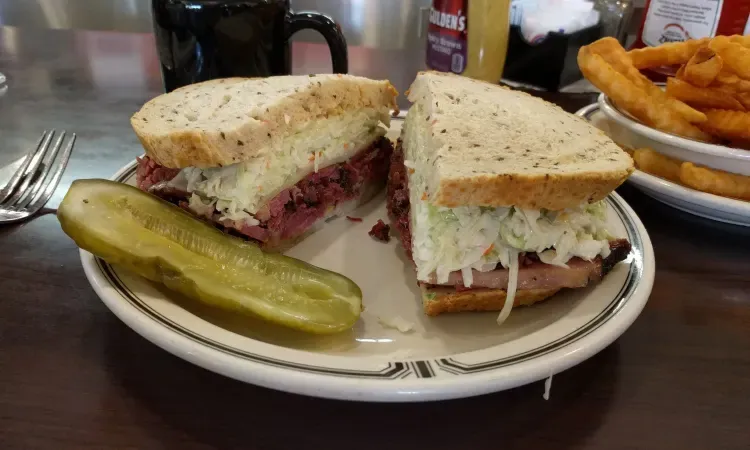
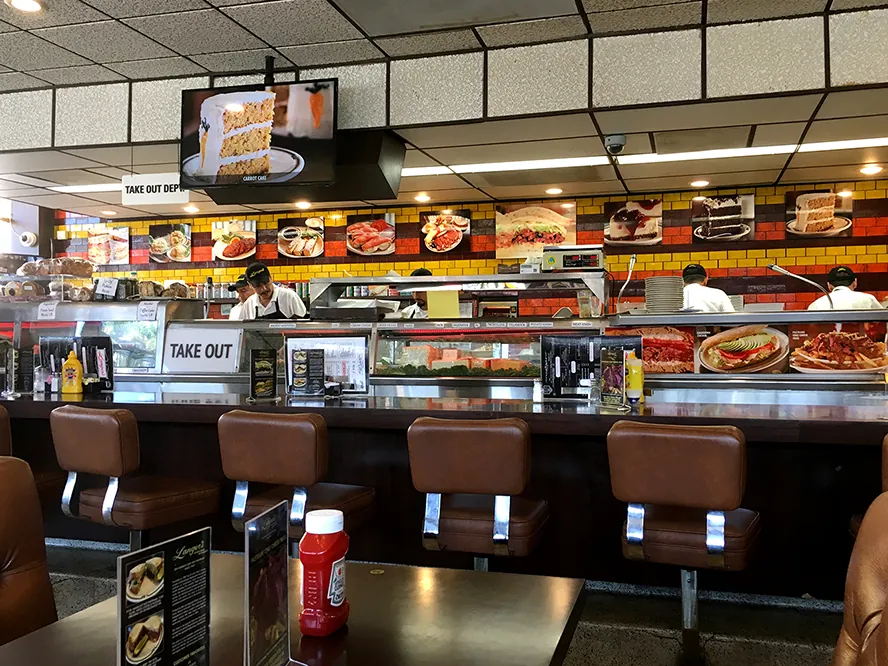
Founded in 1947 by Al Langer in Westlake, Langer's Delicatessen is a
world-renowned Los Angeles institution legendary for its Jewish delicatessen
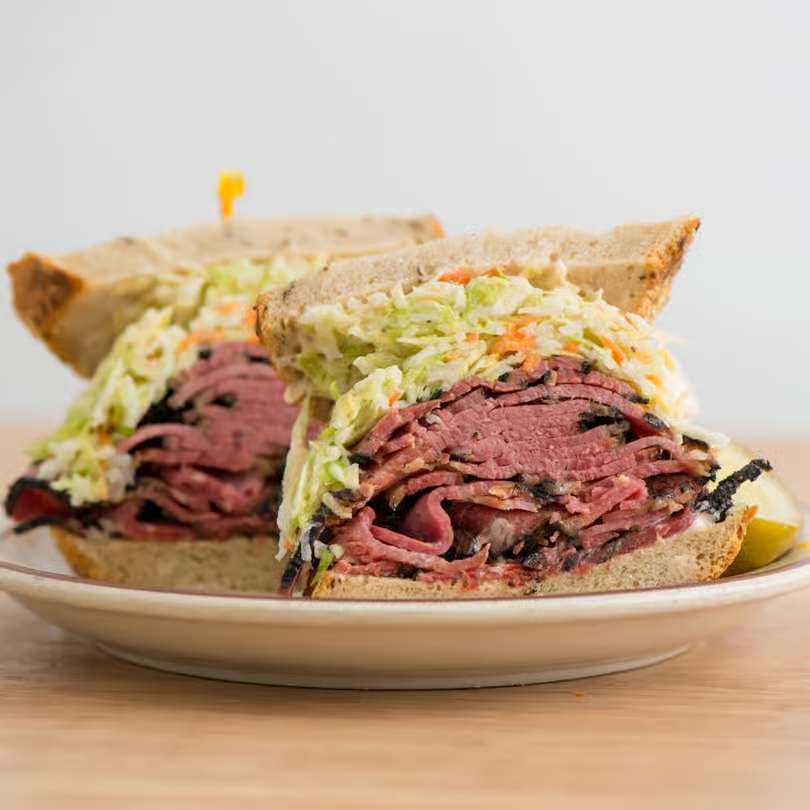
classics. Famous for creating the #19 sandwich—a masterclass of hot pastrami,
Swiss cheese, coleslaw, and Russian dressing piled on warm, double-baked rye
bread—Langer's has earned a James Beard Award and international acclaim. Still
operating from its original vinyl booth storefront near MacArthur Park, it
remains the gold standard for pastrami.
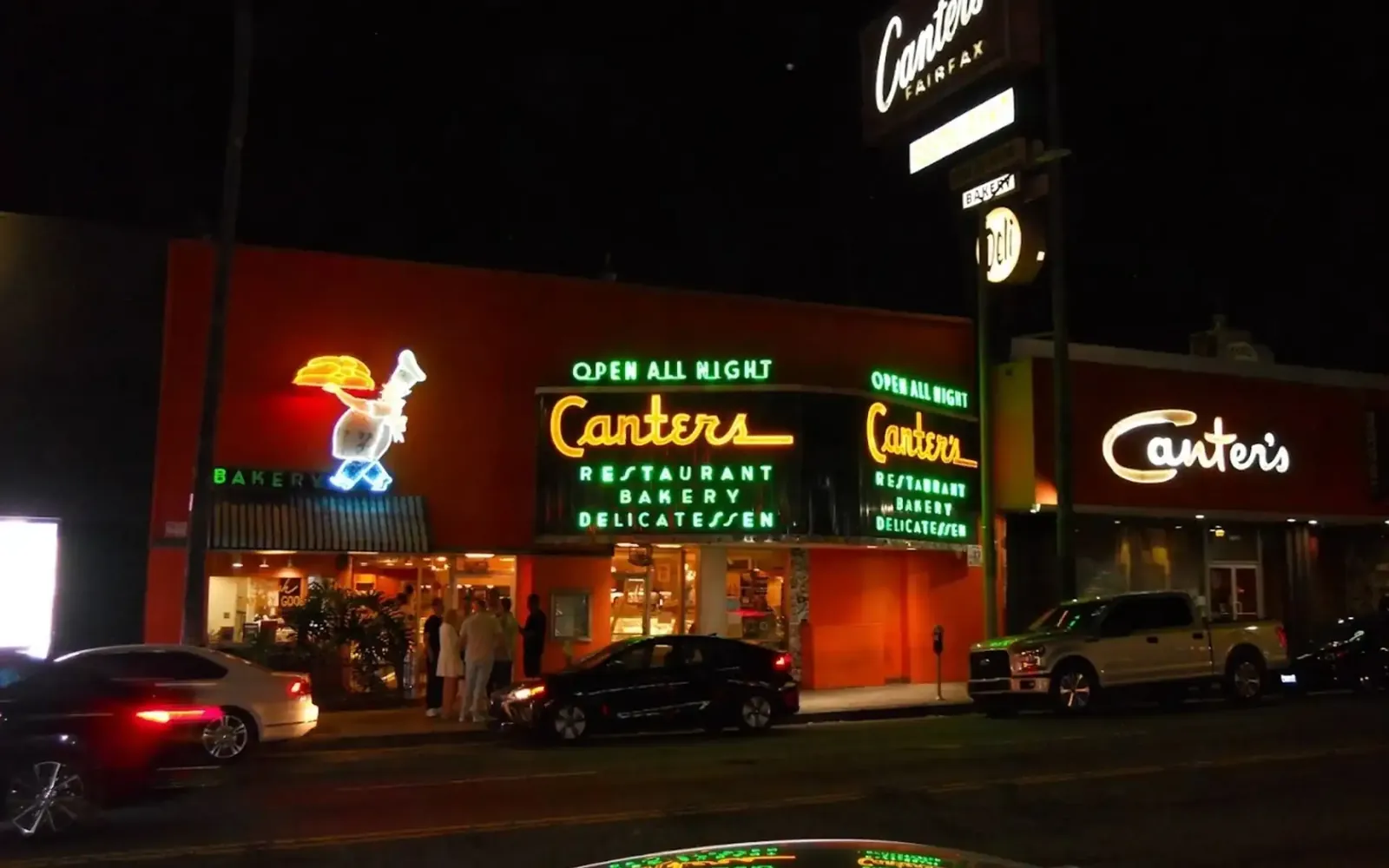
Originally opened in 1931 in Boyle Heights before relocating to the Fairfax
District in 1953, Canter's Deli is a legendary Los Angeles institution. Famous
for its towering hot pastrami on rye, comforting matzo ball soup, and freshly
baked rugelach, this sprawling, retro-styled delicatessen has fueled generations
of locals, late-night revelers, and Hollywood stars beneath its iconic
autumn-leaf ceiling. Complete with mid-century vinyl booths, an in-house bakery,
and its famous attached cocktail lounge—The Kibitz Room—Canter's serves around
the clock, closing only for Rosh Hashanah and Yom Kippur.
Bay Cities Italian Deli (Santa Monica)
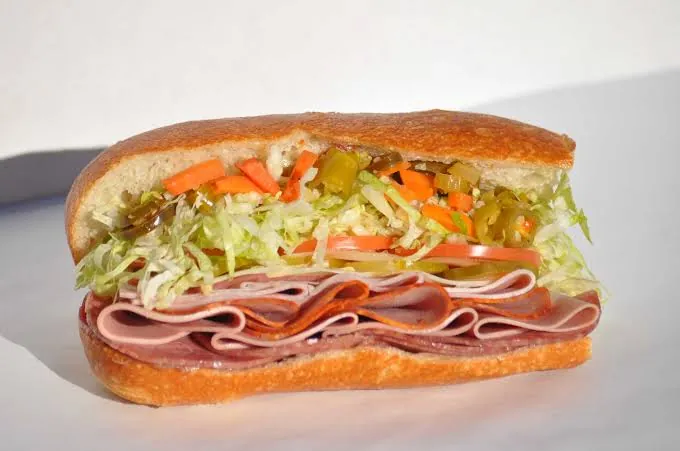
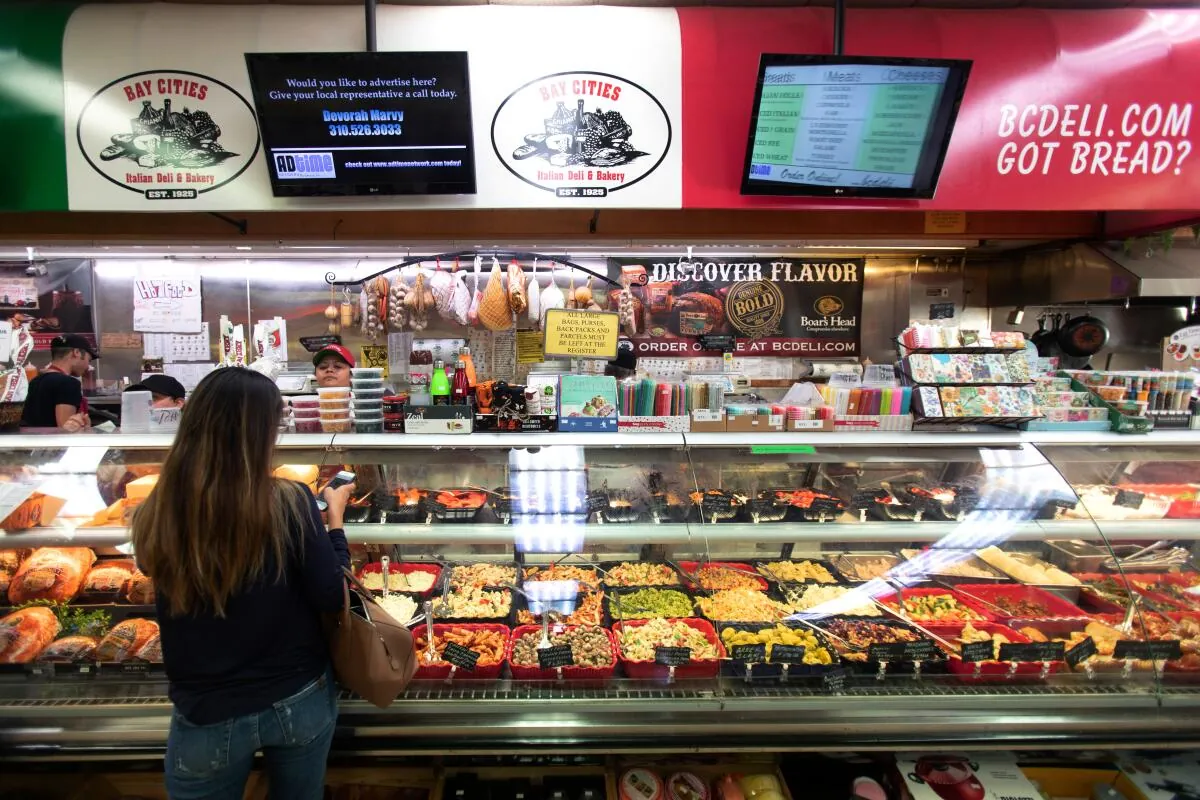
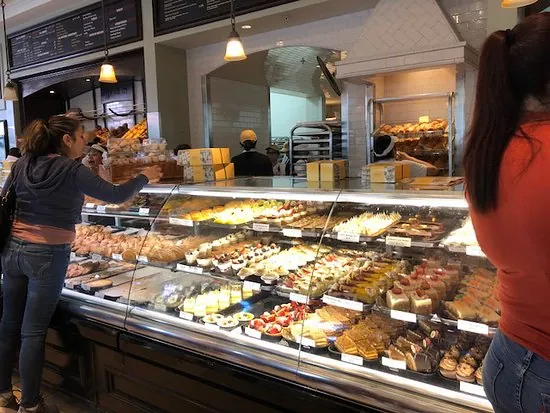
Founded in 1925 in Santa Monica, Bay Cities Italian Deli & Bakery is a
legendary Westside institution renowned as the home of "The Godmother." This
iconic sandwich stacks prosciutto, ham, capicola, mortadella, salami, and
provolone on a crusty, freshly baked Italian roll, topped with "the works"—a
tangy mix of hot peppers, pickles, onions, lettuce, tomatoes, and Italian
dressing. It doubles as a sprawling Italian specialty market stocked with
imported cheeses, wines, and fresh pastas, with a line that regularly spills
into its cramped parking lot.
Porto's Bakery (Glendale & various)
Founded in 1976 by the Porto family in Echo Park after emigrating from Cuba, and
anchored in Glendale since 1982, Porto's Bakery & Cafe is an iconic Southern
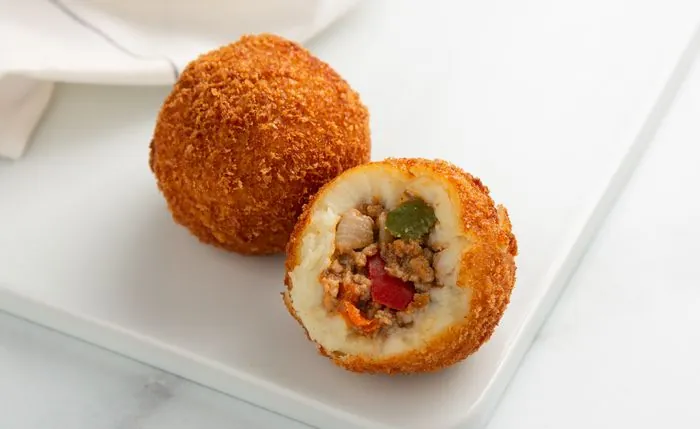
California institution famous for its Cuban pastries and savory bites. Best
known for its crispy potato balls (papas rellenas), sweet guava-and-cheese
pastries, and golden chicken croquettes, this bustling bakery draws massive
crowds who queue up for fresh-baked goods and classic Cuban sandwiches. The
family has since grown it into six Southern California locations, each with the
same lines out the door.
Diners, Burgers, Hot Dogs & Roadside Classics
The Original Pantry Cafe (Downtown LA)
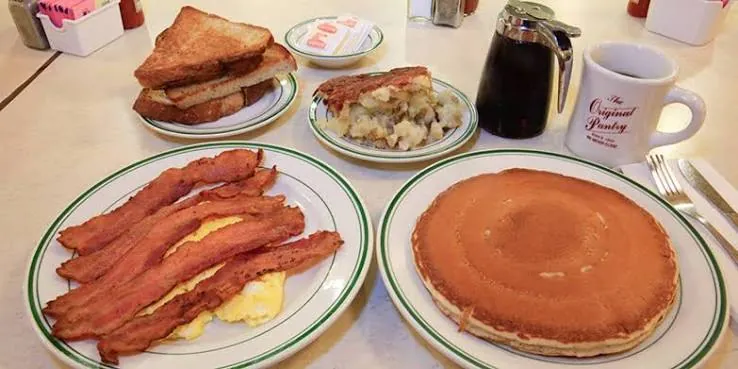
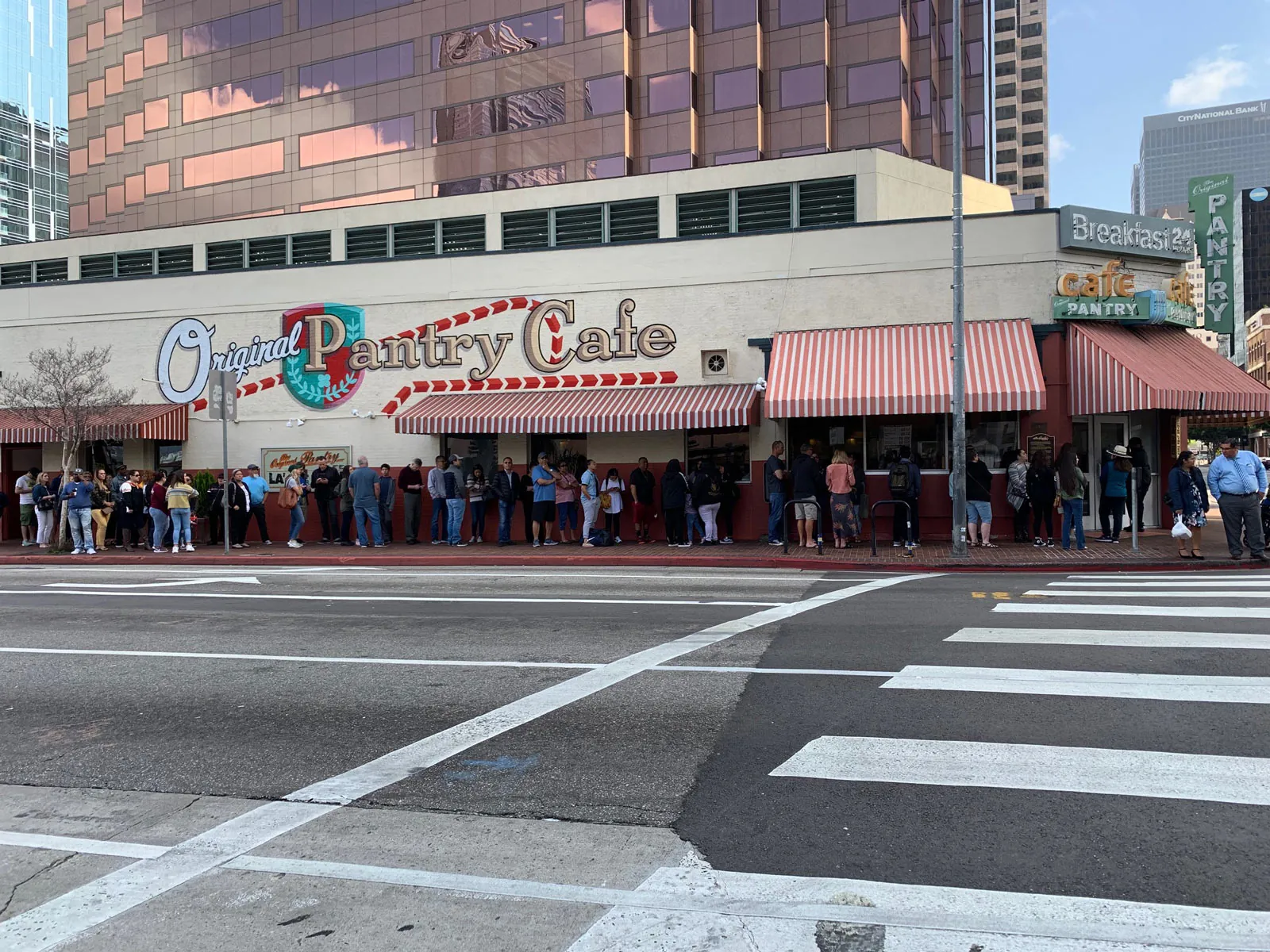
Founded in 1924 in Downtown Los Angeles, The Original Pantry Cafe is a
legendary diner that famously went more than a century without locks on its
doors. Best known for its colossal portions of classic American comfort
food—thick-cut French toast, massive sirloin steaks, and signature sourdough
toast—this iconic greasy spoon has served politicians, celebrities, and
late-night revelers around the clock, including 42 years under former LA Mayor
Richard Riordan. Shuttered by a labor dispute in 2025, it returned in 2026 under
the nonprofit Hope the Mission, which channels its proceeds to LA homeless
shelters. Inside, the stainless-steel counter, the historic photos, and the long
sidewalk queue are unchanged.
The Apple Pan (West LA)
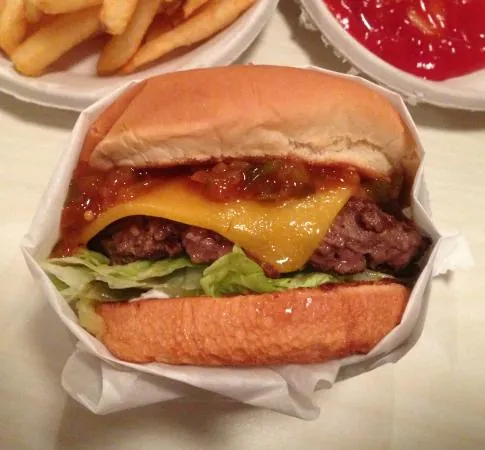
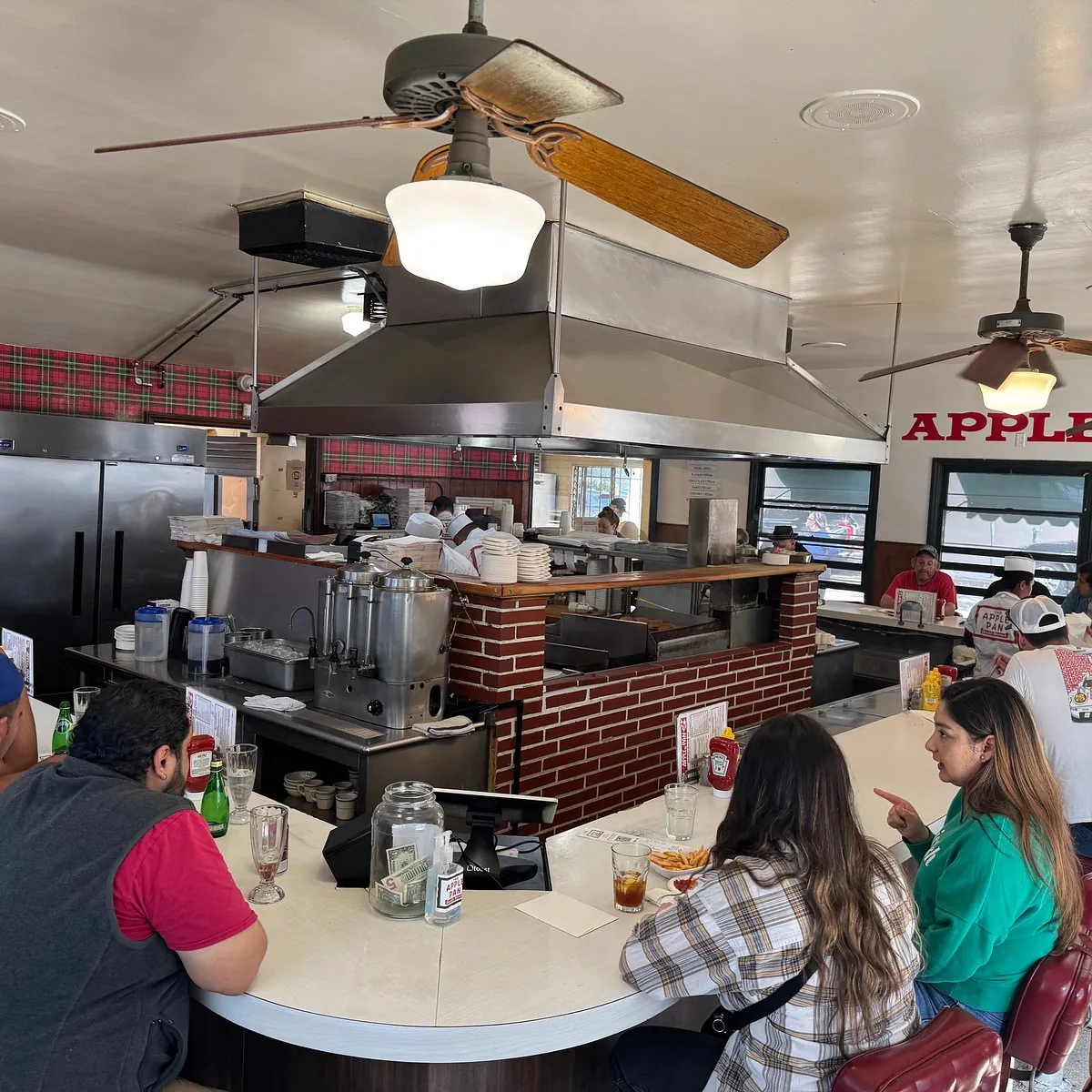
Founded in 1947 by Ellen and Alan Baker in West Los Angeles, The Apple Pan is a
classic, red-brick burger counter virtually frozen in time. Best known for its
legendary "Hickoryburger"—a juicy beef patty slathered in a smoky, sweet
barbecue sauce—and its crisp, lattice-topped fresh apple pie served à la mode,
this U-shaped counter dining spot operates with seamless efficiency.
Paper-capped line cooks, paper-wrapped burgers, and Coca-Cola poured into paper
cones nestled in metal holders complete the effect.
Original Tommy's (Westlake)
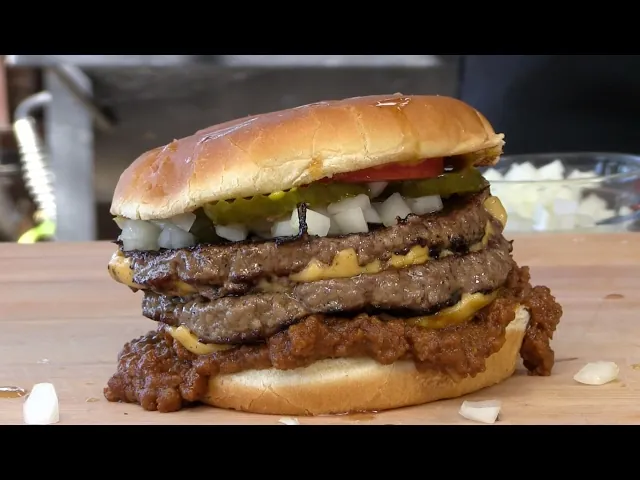
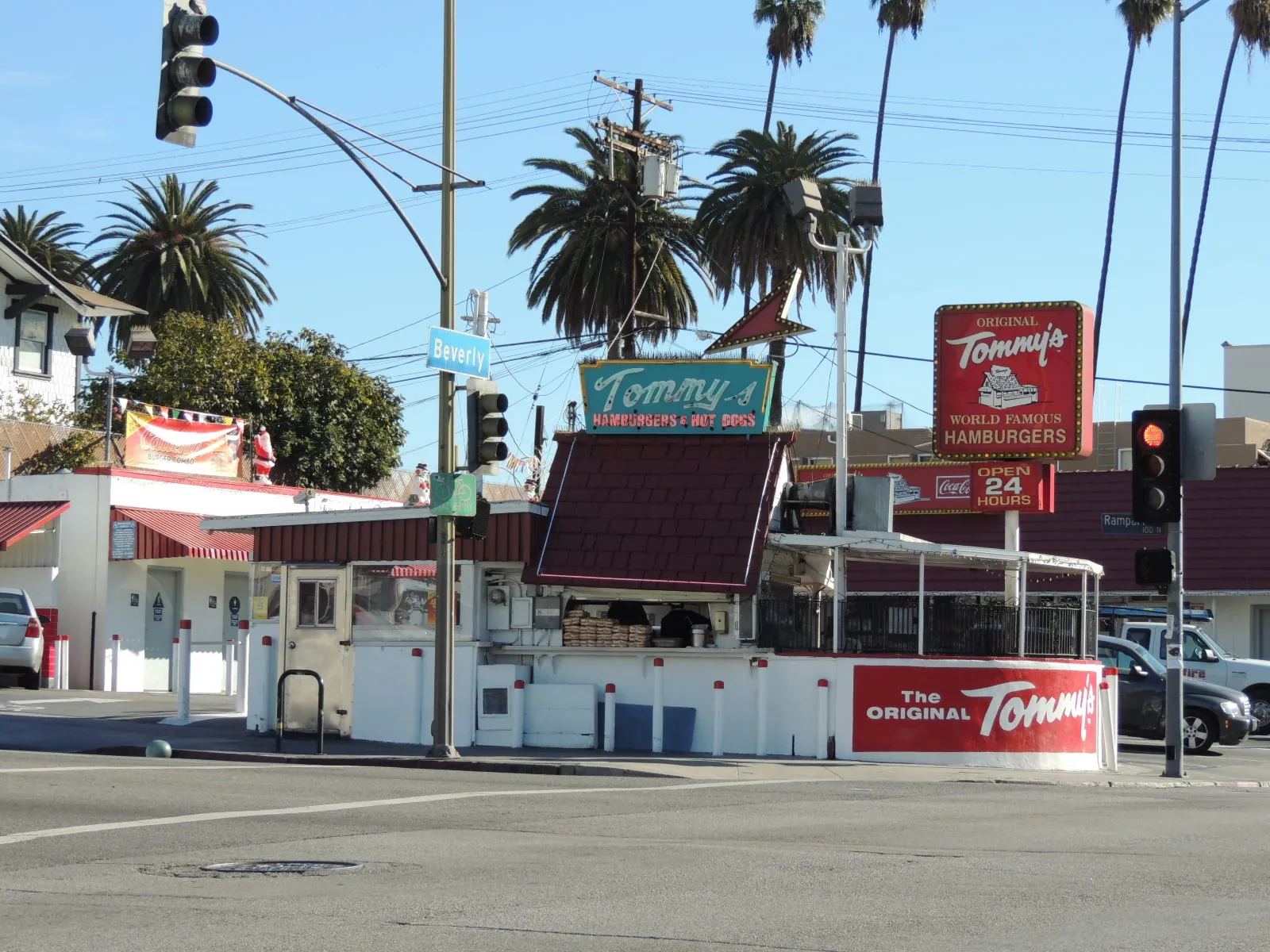
Founded in 1946 by Tom Koulax on the corner of Beverly and Rampart Boulevards,
Original Tommy's is a legendary Los Angeles burger stand that pioneered the
city's chili burger culture. Best known for its signature chili cheeseburger—a
juicy beef patty buried under a generous ladle of their famous, heavy-spiced
chili and layered with a thick slice of beefsteak tomato, chopped onions,
pickles, and mustard—Tommy's delivers an unpretentious, late-night comfort food
experience. The paper-wrapped burgers come around the clock from walk-up
windows, with extra chili, onion, or tomato free for the asking.
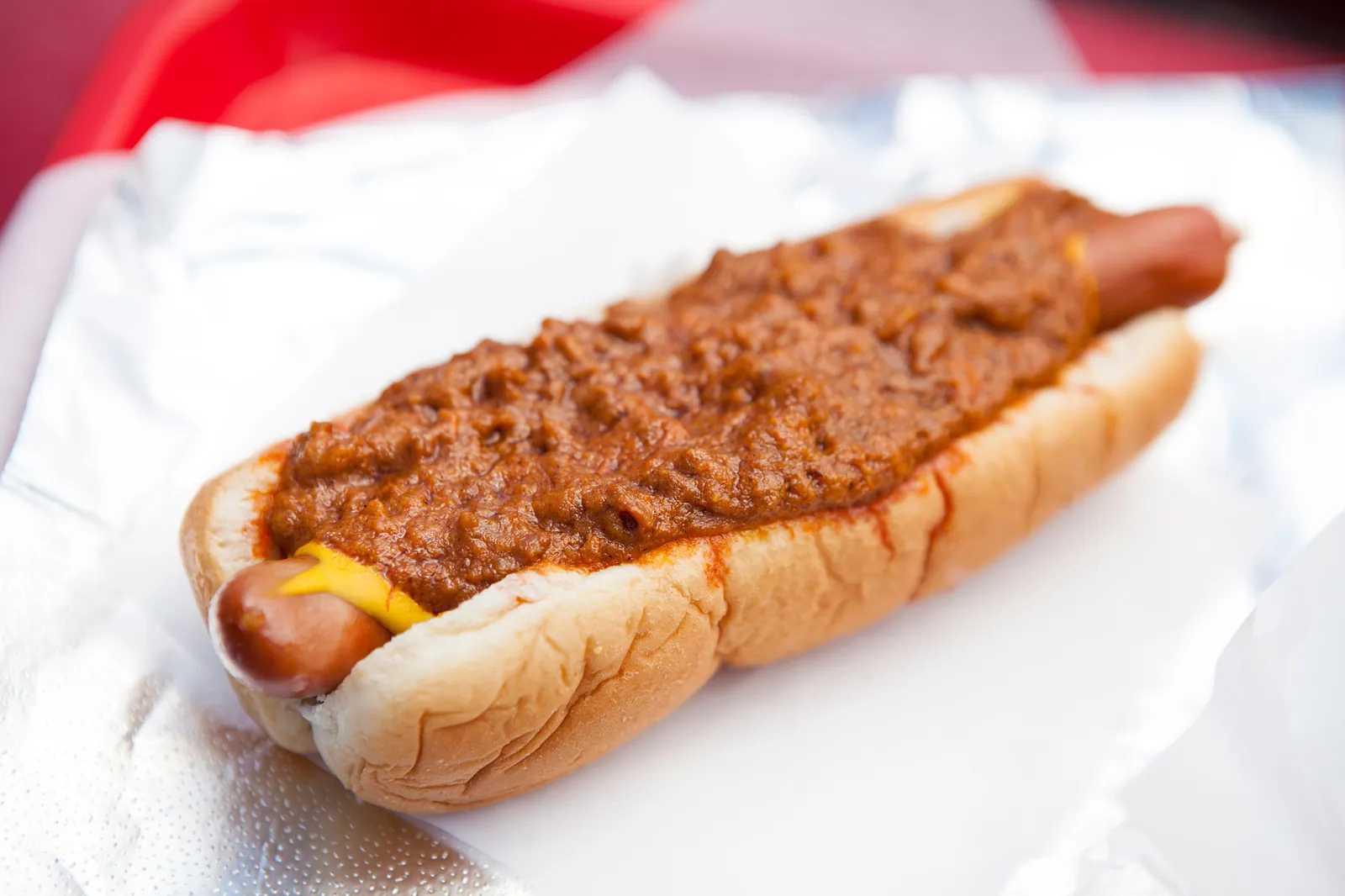
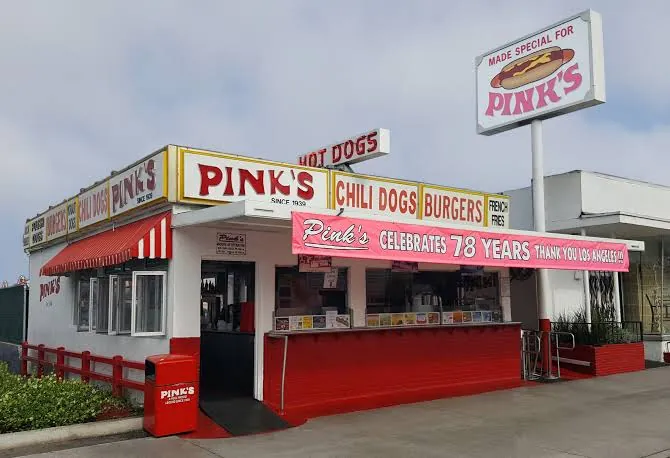
Founded in 1939 by Paul and Betty Pink as a single pushcart on La Brea Avenue,
Pink's Hot Dogs is an iconic Hollywood landmark legendary for its sprawling menu
of inventive frankfurters. Best known for its famous chili dog—a snap-crusted
all-beef frankfurter loaded with secret-recipe chili, mustard, and diced onions,
often crowned with shredded cheddar—Pink's has attracted generations of locals,
tourists, and A-list celebrities. Hundreds of autographed celebrity photos line
the dining room, candy-striped awnings shade the walk-up counter, and the
sidewalk queue rarely disappears.
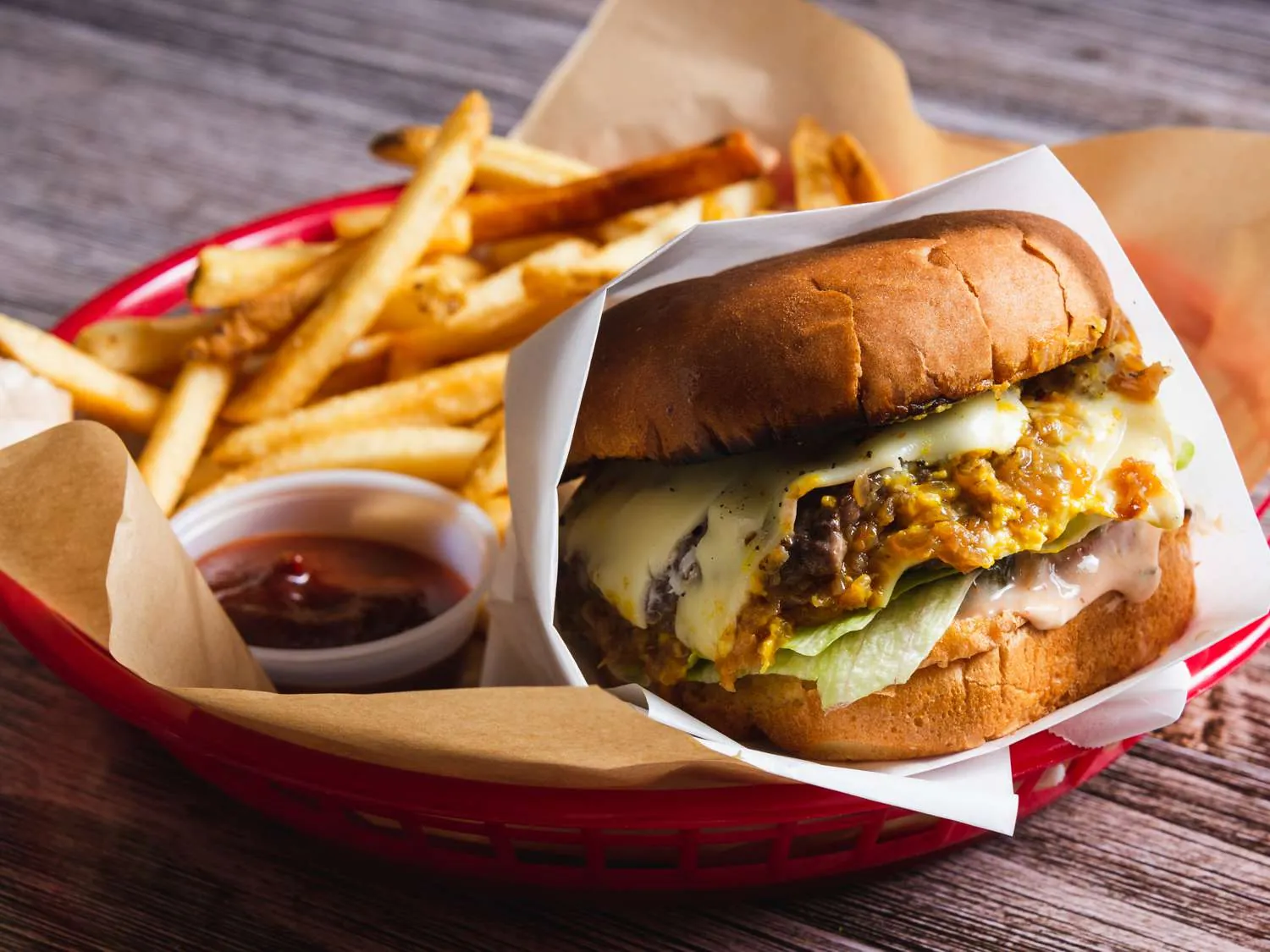
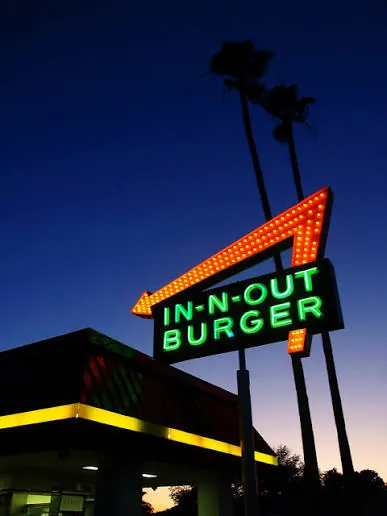
Founded in 1948 by Harry and Esther Snyder in Baldwin Park, In-N-Out Burger is
Southern California's ultimate fast-food institution and the birthplace of the
drive-thru speaker box. Renowned for its uncompromising commitment to freshness,
the family-owned chain serves classic, never-frozen beef burgers, hand-cut
french fries, and real ice cream shakes. Its famous "Not-So-Secret
Menu"—featuring iconic customizations like the "Double-Double Animal
Style"—is matched by the neon yellow-arrow signage and the crossed palm trees
planted outside its stores, a nod to the buried treasure in It's a Mad, Mad,
Mad, Mad World.
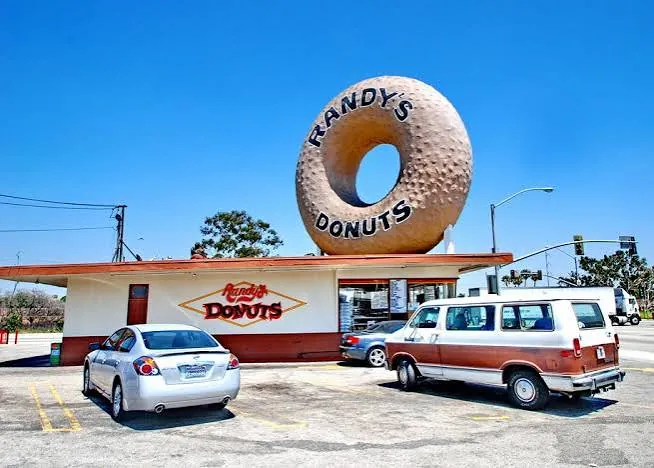
Built in 1953 in Inglewood as the second Big Donut Drive-In and renamed in 1976,
Randy's Donuts is a world-famous, mid-century modern icon best known for the
colossal, 32-foot donut towering over its roof. Located near Los Angeles
International Airport (LAX), this drive-thru and walk-up stand has made
countless cameo appearances in television, music videos, and Hollywood films
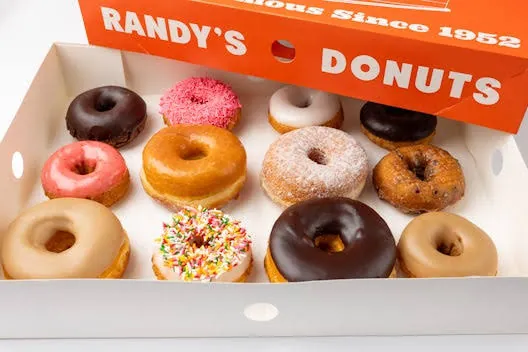
like Iron Man 2. Underneath the donut, the shop turns out classic, fluffy glazed
rings, jelly-filled pillows, and decadent specialty pastries made fresh daily.
Bob's Big Boy (Burbank)
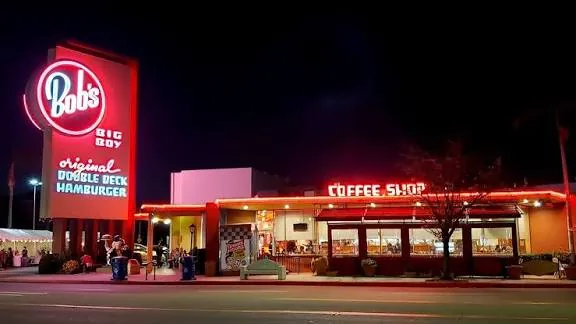
Built in 1949 to a Wayne McAllister design, the Burbank Bob's Big Boy is the
oldest surviving Big Boy in America, saved from demolition by the LA
Conservancy and declared a California Point of Historical Interest in 1992.
The building catches Streamline Moderne on its way to the freeform coffee-shop
style that would define 1950s Los Angeles: long horizontal rooflines, wide
canopies, curving walls of glass, and a 70-foot neon tower sign angled to be
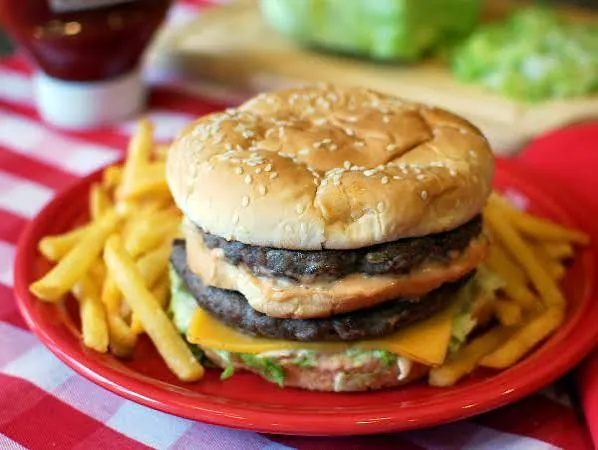
read from far down Riverside Drive. The original double-decker burger is still
on the menu, carhops work Saturday and Sunday nights, and every Friday from
four to ten the parking lot fills with a classic car show.
Cassell's Hamburgers (Koreatown)
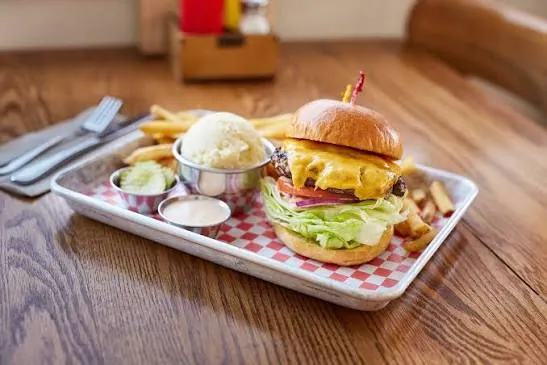
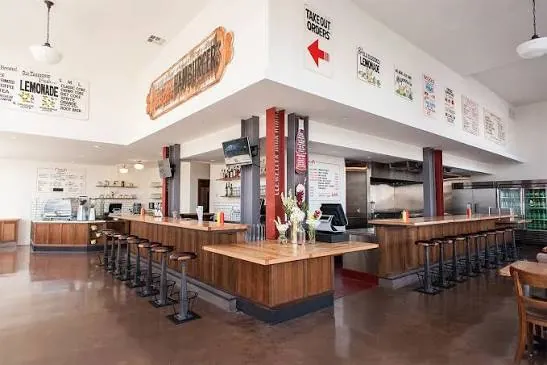
Al Cassell opened Cassell's in 1948 across from Bullocks Wilshire, grinding
his beef fresh every day, making his own mayonnaise and lemonade, and refusing
to serve French fries on the theory that "the more things you do, the less
chance there is of reaching perfection." The counter closed in 2012 and
reopened two years later inside the historic Hotel Normandie, still cooking on
Cassell's original crossfire broiler and using his grinder and patty press.
The menu has since grown to include malts, house-made pies, and a diner
breakfast, but the burger remains a third- or two-thirds-pound slab of chuck
and brisket ground in-house that morning.
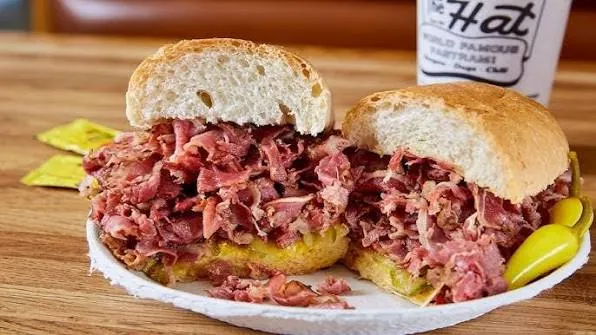
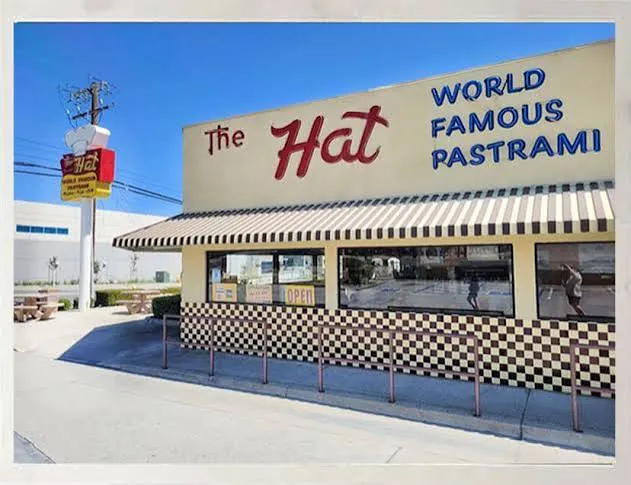
The Hat opened in 1951 at the corner of Valley and Garfield in Alhambra, and
the original stand still anchors the small chain that grew out of it across
the San Gabriel Valley. The order is the pastrami dip: a towering mound of
thin-sliced, steaming pastrami crammed into a French roll, dunked in jus, and
handed over with yellow mustard and pickle chips. Chili cheese fries arrive in
a portion sized for a table rather than a person. The sign with its floating
chef's hat has been a Valley Boulevard landmark for seven decades.
Southern, Soul Food & Mediterranean Poultry
Roscoe's House of Chicken 'N Waffles (Hollywood & various)
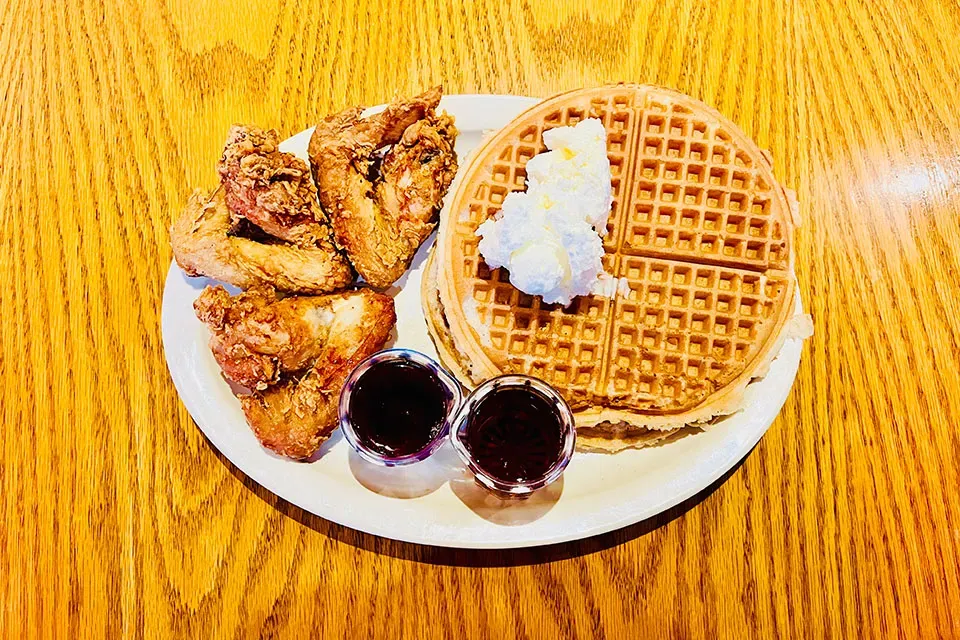
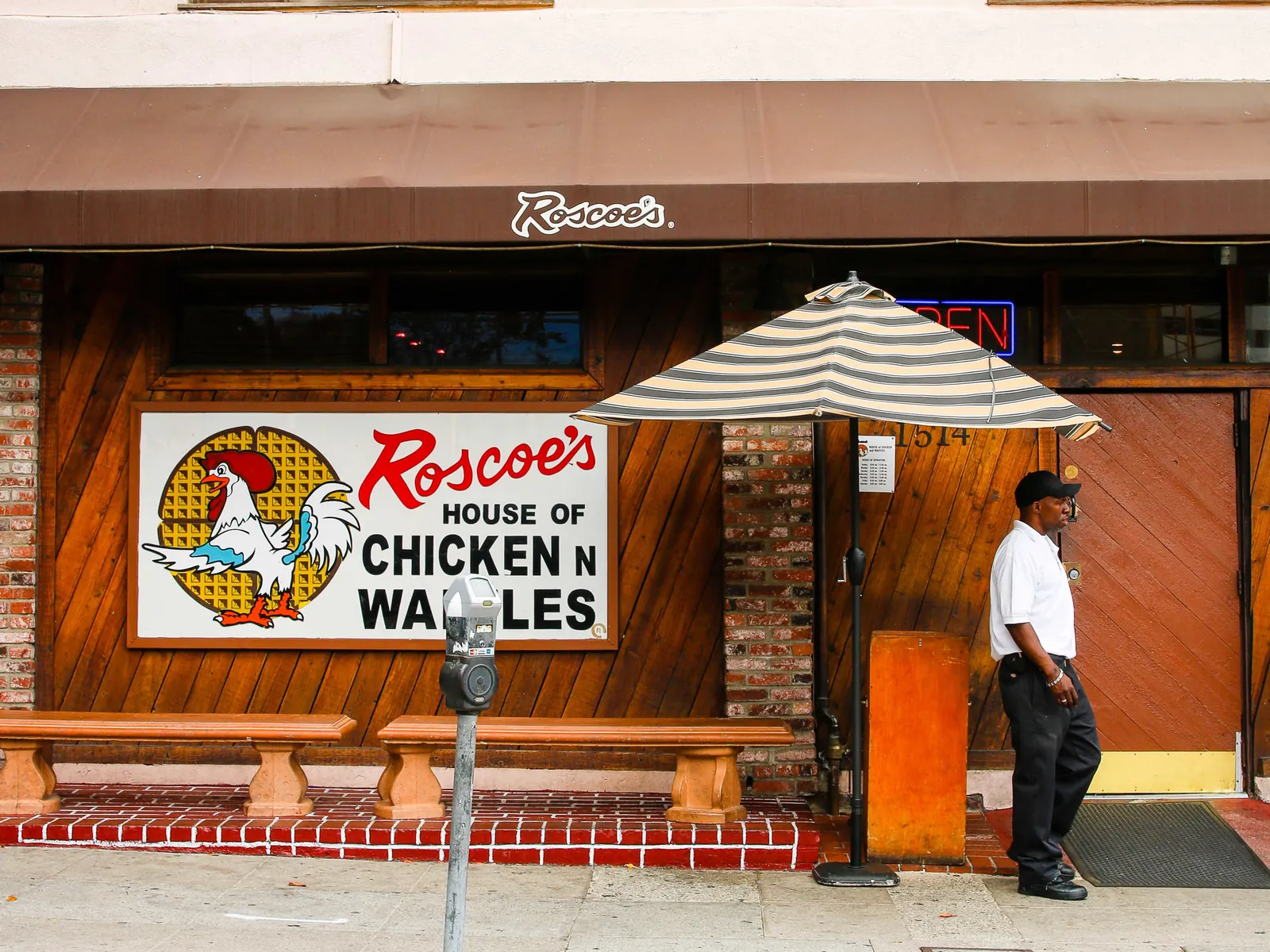
Founded in 1975 by Harlem native Herb Hudson in Hollywood, Roscoe's House of
Chicken 'N Waffles is an iconic Los Angeles soul food institution that
popularized the ultimate sweet-and-savory comfort food pairing on the West
Coast. Best known for its signature dish—crispy, well-seasoned fried chicken
served alongside fluffy, buttered waffles and warm maple syrup—Roscoe's quickly
became a cultural touchstone. Early word-of-mouth from Natalie Cole, Stevie
Wonder, and Redd Foxx brought in the crowds, and the menu has since sprawled
across seven locations and a long list of pop-culture cameos.
Dino's Famous Chicken (Pico-Union)
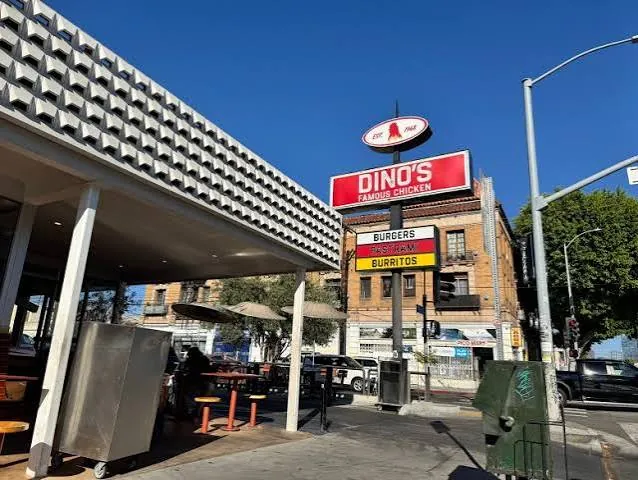
Founded in 1968 by Demetrios Pantazis on Pico Boulevard, Dino's Famous Chicken
is a legendary Los Angeles institution famous for its addictively spiced,
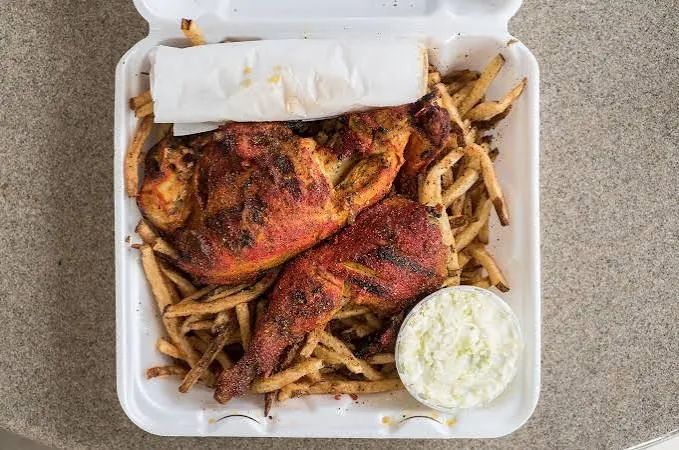
flame-broiled birds. Best known for the plate regulars call the Pollo
Maniaco—a half chicken steeped in the secret, vibrant red marinade Pantazis
created in 1980 by crossing Greek herbs and citrus with the Latin spice of the
surrounding neighborhood, served over a bed of thin-cut French fries that soak
up the rich, savory drippings—Dino's offers an unpretentious, high-flavor
comfort meal. Orders still come through walk-up windows in no-frills takeout
containers, with lines forming down the block around noon and again after six.
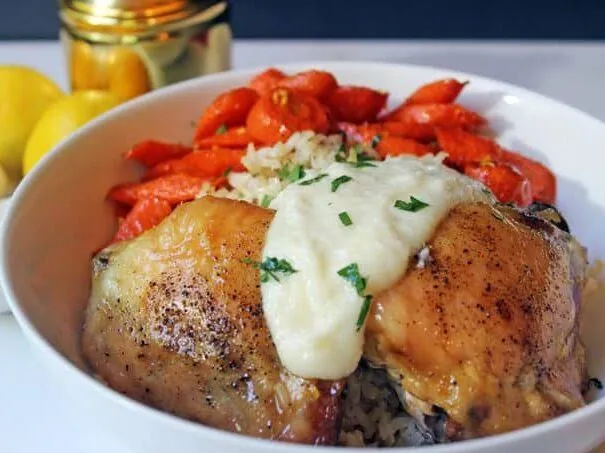
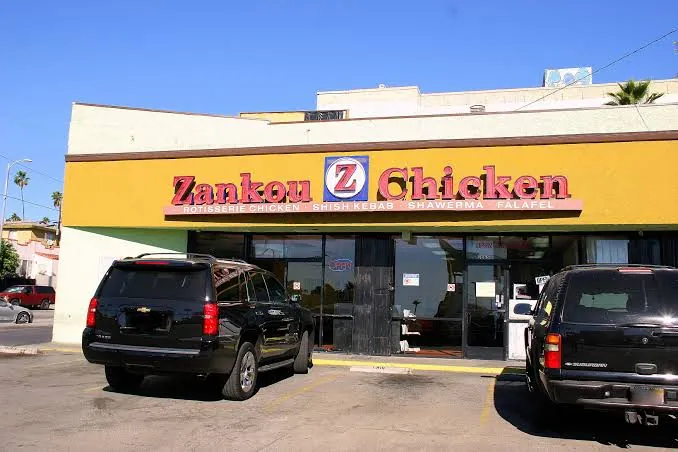
Founded in Beirut in 1962 by the Armenian couple Vartkes and Markrid
Iskenderian and brought to East Hollywood's Little Armenia in 1984, Zankou
Chicken is a legendary Los Angeles institution that revolutionized the city's
Middle Eastern fast-casual dining scene. Famous for its golden-brown,
spit-roasted rotisserie chicken and flatbread, Zankou's undeniable centerpiece
is its secret-recipe garlic spread (toum)—a fiercely pungent, whipped sauce
created by Markrid herself that has earned a cult following across Southern
California. Tender shawarma and golden falafel joined the menu in Los Angeles,
and that one Sunset Boulevard storefront has since multiplied across the region.
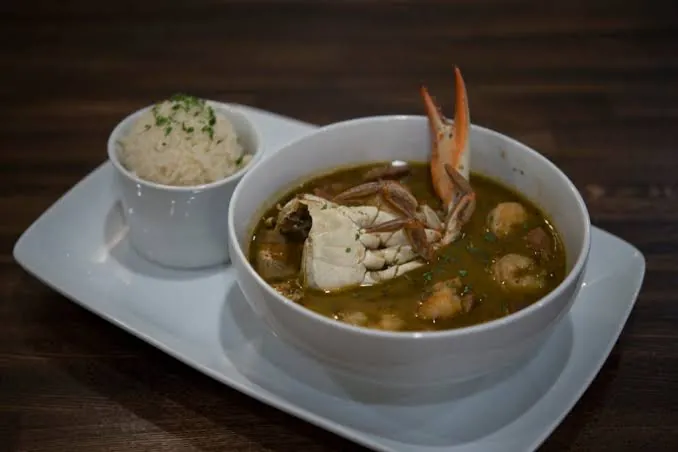
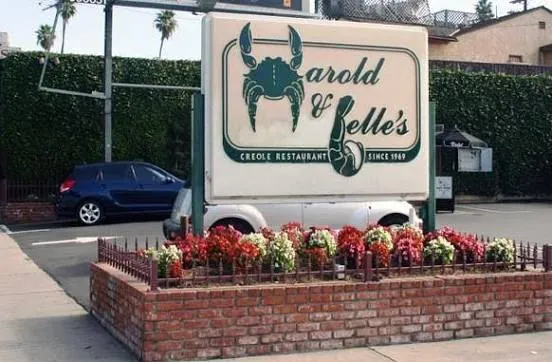
Harold Legaux Sr. and his wife Mary Belle opened Harold & Belle's in
September 1969 as a place where New Orleans transplants along Jefferson
Boulevard could gather over po' boys, red beans and rice, and filé gumbo served
only on Fridays. That gumbo—dark roux, ground sassafras, shrimp, sausage, ham,
blue crab, and chicken—is now on the menu every day, in portions that have
become notorious. The room moved to linen tablecloths and candlelight under
Harold Jr., who added the crawfish étouffée and shrimp scampi that anchor the
menu today. Ryan Legaux, the third generation, has run it since 2009.
Old Hollywood & Classic Dining Rooms
Musso & Frank Grill (Hollywood)
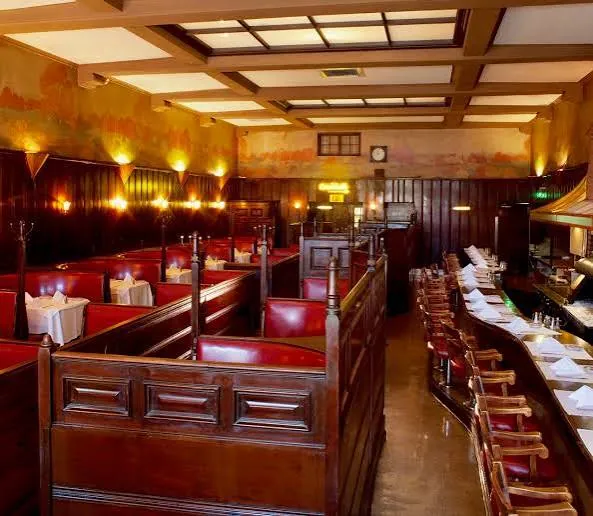
Opened in 1919 as Frank's Café and renamed a few years later, Musso &
Frank Grill is the oldest restaurant in Hollywood and is still run by
descendants of John Mosso, who bought in during the 1920s. The menu chef Jean
Rue built in that decade survives largely intact—grilled lamb kidneys with
bacon, Thursday chicken pot pie, steaks and chops over the
original grill—delivered by waiters in the same red coats they have worn for
generations.
Orson Welles is said to have written at a back booth, and Faulkner, Fitzgerald,
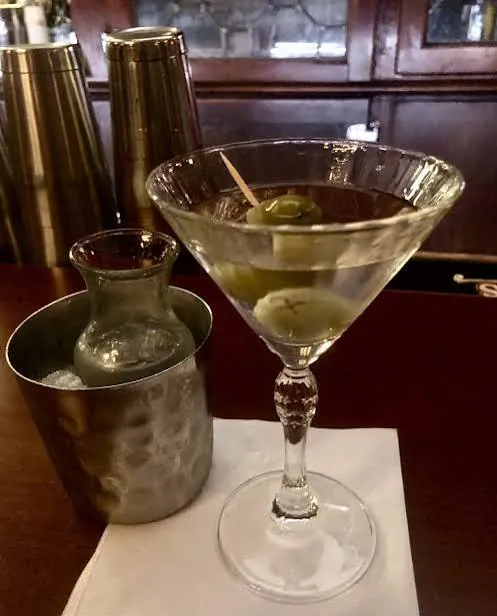
and Steinbeck treated the old Back Room as a second office. GQ once named its
martini the best in America; the restaurant poured 55,272 of them in 2018,
each served with the remaining half chilling in a sidecar on ice.
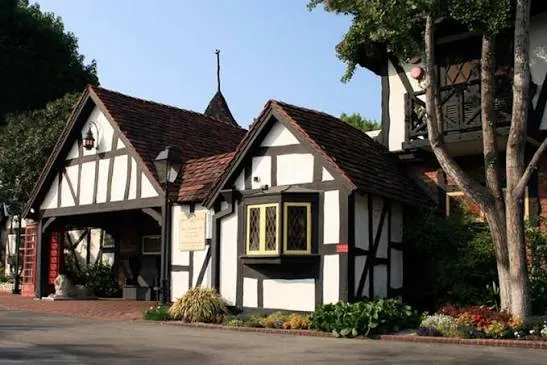
Opened in June 1922 as Montgomery's Country Inn and renamed three years later
after the Robert Burns poem, the Tam is the oldest Los Angeles restaurant still
run by the same family in its original location. Brothers-in-law Lawrence Frank
and Walter Van de Kamp—who went on to create Lawry's—hired art director Harry
Oliver to build it, and studio carpenters gave it a Storybook Style exterior of
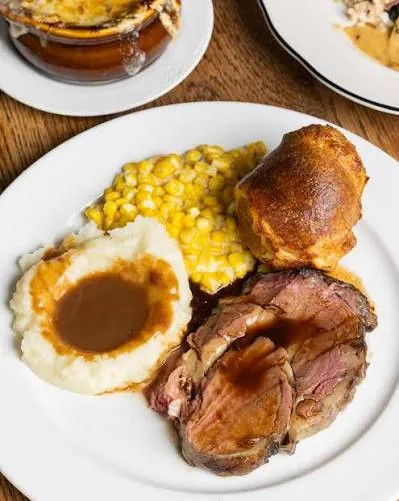
crooked timber and rolling roofline. Roasted prime rib with Yorkshire pudding
has been the house dish ever since, alongside toad in the hole and more than
650 bottles on the Great Wall O' Scotch. Walt Disney's studio was down the
road; he came so often that Table 31 now carries a plaque, and early animation
ideas were worked out on cocktail napkins on the patio he asked to have covered.
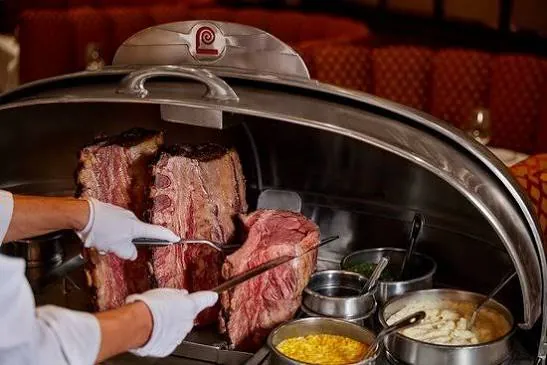
When Lawrence Frank and Walter Van de Kamp opened Lawry's on La Cienega in
1938, mustard fields still grew along the street and the menu offered exactly
one entrée: roasted prime rib, wheeled to the table on a gleaming silver cart
and carved to order. Frank designed the carts himself, heated by charcoal pans
underneath and weighing close to 900 pounds fully loaded—heavy enough that the
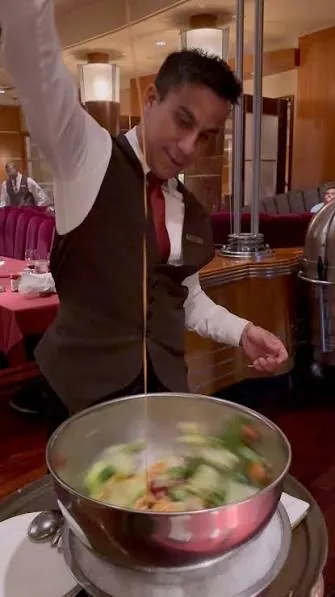
original floor had to be reinforced to carry them. The Spinning Bowl salad,
tossed in a bowl spun over crushed ice tableside, is still performed the same
way, and this is where Lawry's Seasoned Salt was born. Dinner cost $1.25 the
year it opened.
Japanese, Chinese, Thai & Korean Landmarks
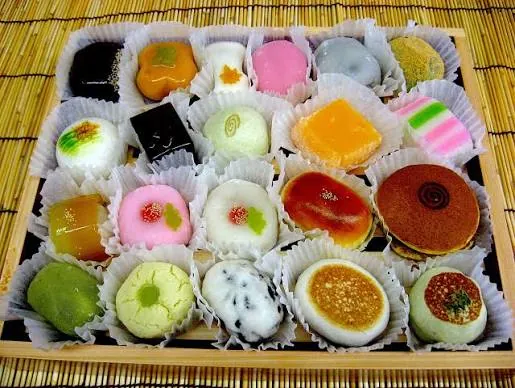
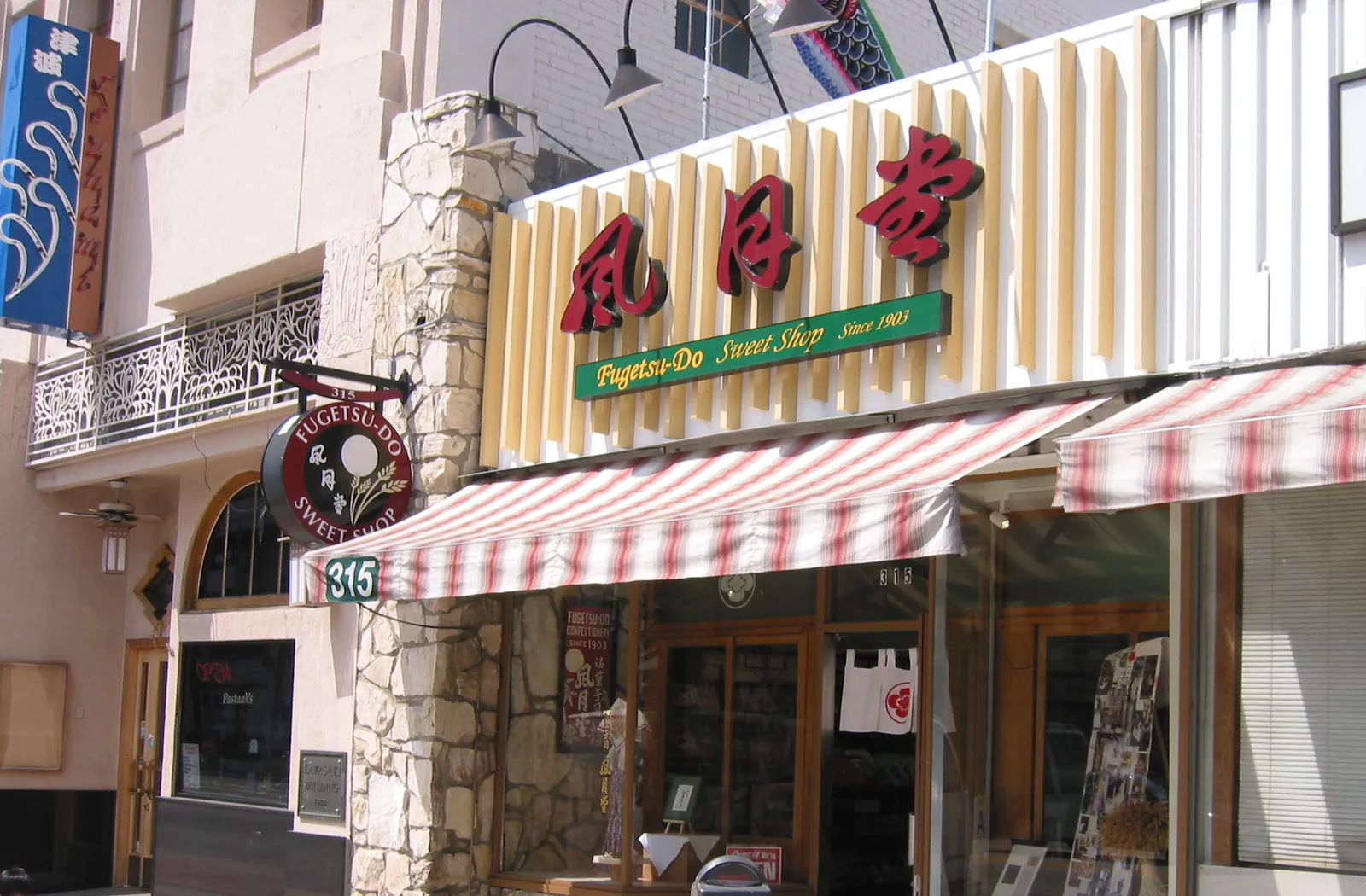
Seiichi Kito opened Fugetsu-Do on East First Street in 1903, making it the
oldest business in Little Tokyo and one of the oldest Japanese American
businesses in the country. The shop still makes mochi and manju by hand—pounded
rice cakes and sweet bean-filled confections that families order by the boxful
for New Year's, Girls' Day, and Boys' Day. It survived the wartime
incarceration of its owners and reopened on Boys' Day, May 5, 1946, with help
from the neighborhood, after the family had slept on the floor of Koyasan
Temple while saving for the rent. Brian Kito, the founder's grandson, has run
it since 1986.
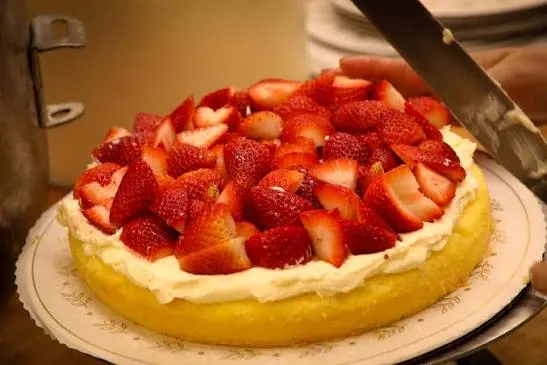
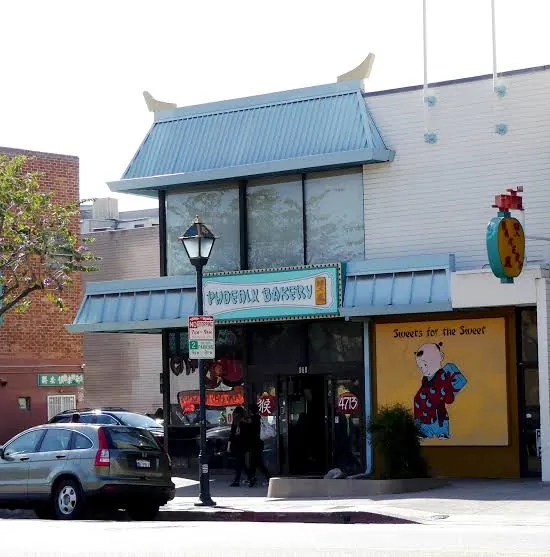
Fung Chow "F.C." Chan and his wife Wai Hing opened Phoenix Bakery in 1938,
selling almond cookies from family recipes that Chinatown could not buy
anywhere else. What made it a citywide fixture was something far less
traditional: the fresh strawberry whipped cream cake developed by F.C.'s
brother Lun, and now the default birthday cake for generations of Angelenos
well beyond the neighborhood. The Chan family moved into their custom-built
shop on North Broadway in 1977 and still runs the counter.
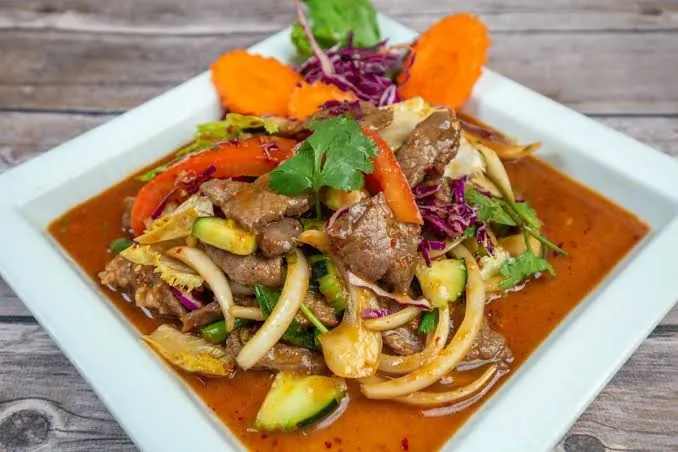
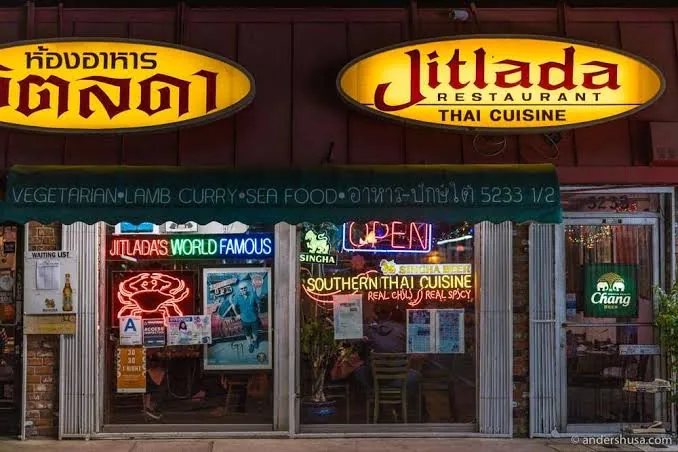
Jitlada opened in a Sunset Boulevard strip mall in the late 1970s, part of the
Thai immigration wave that built the only officially designated Thai Town in
the country. It became a destination in 2006, when siblings Sarintip "Jazz"
Singsanong and chef Suthiporn "Tui" Sungkamee took over and added a page of
untranslated dishes from their native Nakhon Si Thammarat to the back of the
takeout menu—fiery, sour, turmeric-heavy southern Thai cooking almost unheard
of in Los Angeles at the time. Food bloggers cracked the code, Jonathan Gold
championed it, and the reputation stuck. Tui died in 2017; Jazz still runs the
room, under framed Matt Groening drawings and floral plastic tablecloths.
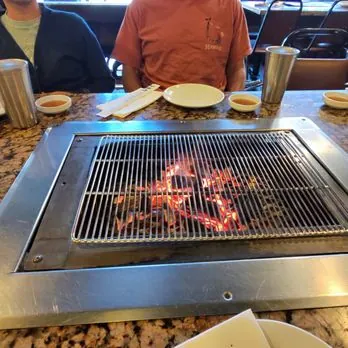
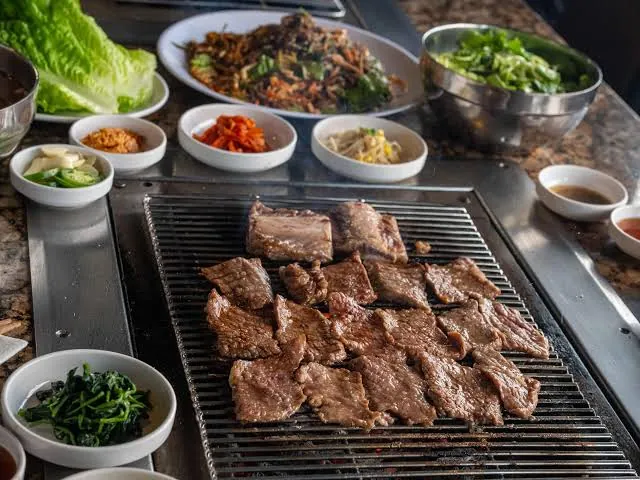
Open since 1983, Soot Bull Jip is one of the last Korean barbecue houses in Los
Angeles still grilling over hardwood charcoal instead of gas. The name
translates to "charcoal fire house," and the pits sunk into the middle of each
table throw off a smoke so thorough that regulars plan their laundry around a
meal here. The menu is deliberately short—no combination platters, just
marinated galbi, pork ribs, bulgogi, beef tongue, and a few stews and cold
noodles. Nancy Park took over her parents' restaurant in 2024 and finally
changed the longtime spelling from "Jeep," after years of calls asking about
cars.